
What Makes Ice Anglers Different?
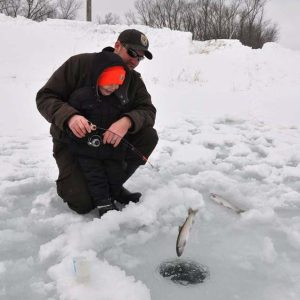
As I’ve observed another warm, 50+ degree F January day, I am lamenting the passing of the central Iowa ice fishing season. It’s not for sure done, but it is becoming a bit more risky to venture out on the ice. As such, it should be no surprise that given the option to read and share an article about ice fishing, I did! Today’s paper resulted from an angler survey in Ontario, and looks at
Recreational vs. Commercial Side-Scan Sonar
I spent this week at the Midwest Fish & Wildlife Conference, which also serves as the Annual Meeting of the North Central Division of AFS. I had the opportunity to attend a number of talks at the conference, I gave a talk myself, and I helped organize a symposium discussing the intersection of fisheries management and aquatic plant/habitat management. One of the talks in our symposium was about using recreational side scan sonar to assess

COVID-Recruited Anglers: How Can We Keep Them Fishing?
Some of you know that I spent many years digging into angler demographics and fishing license sales data. So, it probably comes as no surprise that when I saw a paper on the topic, it piqued my interest. Today’s paper is from NAJFM, and looks at fishing license sales, motivations to fish, and subsequent angler retention during and after the Covid-19 pandemic. The really interesting thing to me is that there are documented differences between

Resource Overlap among Walleye, Smallmouth Bass, and Northern Pike
Today’s paper is from the most recent issue of TAFS. It investigates niche overlap and habitat use in a glacial lake-wetland ecosystem complex in South Dakota. The species studied were Walleye, Northern Pike, and Smallmouth Bass. While significant diet and habitat overlap was observed, there were marked differences. Specifically, Walleye used the wetland habitat, while the others did not, and Walleye consumed significant numbers of bullheads, which the other species did not. The thing that

From Collaborative Conversations to Actionable Findings
Let me start with, I love this paper. I love this kind of work. As a former agency employee, I know that more employees to do the work does not seem to be the future path. That necessitates creative solutions, and I think collaborations with stakeholders are an absolute key to future success. I was involved in some of these efforts in my prior position in Iowa. I’ve heard that anglers are starting to ask

Stock Local
I had to scramble this morning. I had seen a number of interesting titles on the AFS Journals website for TAFS recently, and went looking for them again today. But, they had been replaced on the “recent” tab with even newer papers, and they have not been published in an issue yet. So, I had to find something new! Once they come out in a new issue from our new publisher, Oxford University Press, I

Mussels Need Our Help
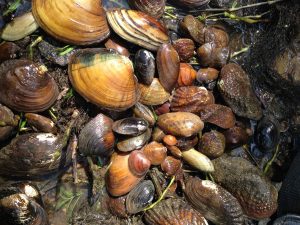
Today’s paper is from the Journal of Aquatic Animal Health, looking at shell deformities in unionid mussels. I am using this paper as an opportunity to give a nod to our CASS (Consortium of Aquatic Science Societies) collaborators in the Freshwater Mollusk Conservation Society. AFS is one of the leaders in CASS, and we are serving this organization by planning the 2028 Joint Aquatic Sciences Meeting, where AFS will holding its 2028 Annual Meeting together

When Brookies Turn Bad
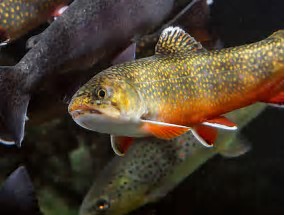
Today’s paper is another great example of integrating fish culture, research and management to address a fishery issue. Nonnative fish create a variety of concerns, including habitat alterations, hybridization with native fish, and more. Brook trout are the problematic species in this instance, and the paper documents the outcomes from mechanical removal, stocking of Trojan YY fish, and modeling future outcomes. This continues to be an emerging area of fisheries research, and the possibilities for

Brooding over Walleye Broodstocks
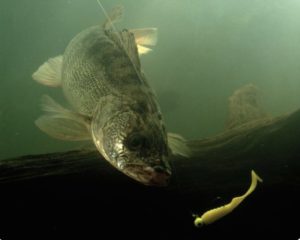
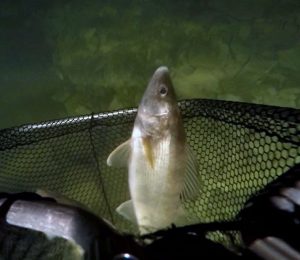
Today’s paper is from the AFS publication, North American Journal of Aquaculture. It provides a benchmark regarding a topic near and dear to my heart – Walleye broodstock collections. I have no accounting of how many hours I’ve spent lifting nets and handling Walleyes. There have been gorgeous sunsets, starry nights, howling winds and blizzards. However, my days of required servitude to Walleyes are behind, any future such endeavors will occur voluntarily. I think this

Yellowstone Cutthroat Hybridization Decline
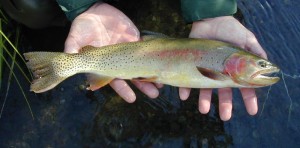
I love today’s paper. It brings me joy to read about a project that involves management, culture, and research. Fisheries managers undertaking a project to address native fish conservation, adopting regulations to encourage harvest of non-native fish as a suppression tool, installing selective weirs on streams, using genetics to identify the degree of hybridization in populations. This is really a nexus of cool fisheries work. https://doi.org/10.1002/nafm.11014

Looking Forward on Forward-Facing Sonar
As I mentioned last week, I recently spend time with a wide variety of folks in the sportfishing community at the ASA (American Sportfishing Association) Sportfishing Summit. One topic that was repeatedly brought up to me was the necessity for the fisheries management community to embrace and use technology such as forward-facing sonar (FFS) to assess fish populations. I am exceptionally proud of the work that has already been done regarding FFS by AFS members/researchers

An Open Letter to Anglers and Fisheries Professionals
A few weeks ago I had the opportunity to attend the American Sportfishing Association’s Sportfishing Summit. This is the fall gathering of individuals representing sportfishing manufacturers, professional angler groups, fishing-centric nonprofits, and a variety of other folks. I felt it was an important investment of my time as the Executive Director of AFS to reach out to and interact with this group. These folks are inextricably linked with our constituents, and I feel that it