
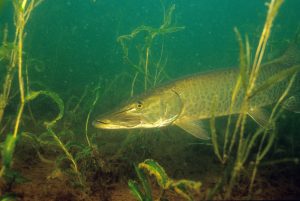
Marco de referencia para la conservación de hábitats de peces en los lagos de Minnesota
Los lagos en Minnesota enfrentan cantidad de factores de estrés ecológico de gran escala, que amenazan hábitats acuáticos críticos para las poblaciones de peces.
American Fisheries Society Family of Websites:
Read our five journals and Fisheries magazine
Find thousands of unpublished agency reports and other information
Join us in Columbus in 2026
Find an AFS Unit near you or in your area of specialty
Fisheries Collaboration Network
Learn how to communicate the effects of climate change on fisheries
Summer internships for high school students
Explore our initiatives to build community in the Society and in the fisheries profession
Find fisheries science products and services
Quick answers to common questions

Los lagos en Minnesota enfrentan cantidad de factores de estrés ecológico de gran escala, que amenazan hábitats acuáticos críticos para las poblaciones de peces.

Les lacs du Minnesota font face à un certain nombre de facteurs de stress écologiques à grande échelle qui menacent le milieu aquatique vital et les populations de poissons.

Lakes in Minnesota face a number of large-scale ecological stressors that threaten critical aquatic habitat and fish populations. We developed a fish habitat conservation framework to guide protection and restoration efforts for lakes of the state.

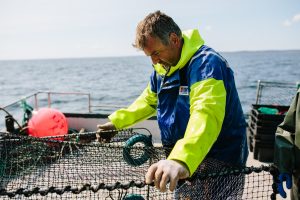
This image features the Fogo Island Atlantic Cod Gadus morhua stewardship fishery, which is a small-scale commercial fishery operating in Newfoundland, Canada.

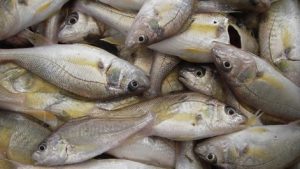
The papers presented in this special section demonstrate recent developments in modeling and mapping to better support the spatial management of marine fisheries.

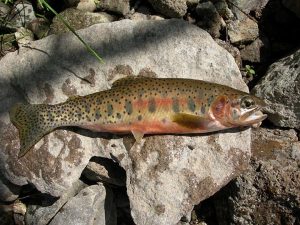
Pacific trout in western North America are strongly valued from ecological, socioeconomic, and cultural views. Despite this, the understanding of their evolutionary histories, overall diversity, and challenges to their conservation is incomplete.

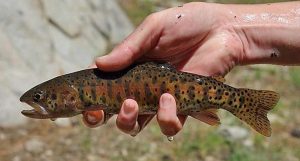
By Helen Neville, Dan Dauwalter & Mary Peacock Freshwater fishes living in streams and rivers can be affected strongly by isolation, which causes a disproportionate degree of fragmentation in such

By Troy D. Tuckey and Mary C. Fabrizio The spatial and temporal extent of summer hypoxia (dissolved oxygen [DO] concentration ≤ 2 mg/L) in Chesapeake Bay and its tributaries has

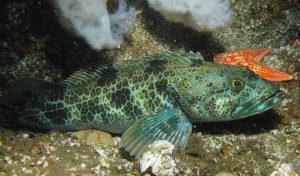
Along the West Coast, lingcod fish are top predators — voracious eaters that aren’t picky about where their next meal comes from. But lingcod in the Pacific Ocean used to be overfished, to the point where managers created protected areas for these fish and other depleted groundfish species, such as yelloweye and canary rockfish. Photo credit: Ed Bierman

The decline of aquatic insects downstream from some hydroelectric dams has been linked to a widespread practice known as hydropeaking, whereby river flows are increased during the day when electricity