Fisheries Magazine
Why It Is Time to Put PHABSIM Out to Pasture
The Physical Habitat Simulation System (PHABSIM) was developed in the 1970s to fill an important void in instream flow assessment.


Quick answers to common questions


The Physical Habitat Simulation System (PHABSIM) was developed in the 1970s to fill an important void in instream flow assessment.
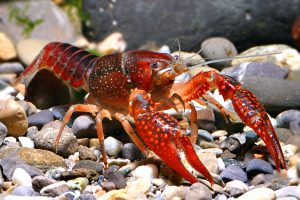
We present a case study of our state agency’s approach to collecting data to support regulation development and accompanying educational efforts in Missouri. We studied other agencies’ approaches, industry pathways, and stakeholder groups to develop and support regulations.
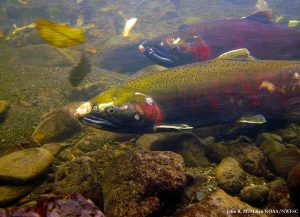
Adult Pacific salmon may reach spawning grounds but perish before reproducing, a phenomenon known as “prespawn mortality.”
“Ecological design” culverts have perceived fiscal limitations that have prevented widespread implementation and consequently hampered conservation and remediation of stream ecosystems. We addressed these perceived fiscal limitations using cost–benefit analysis to estimate the lifetime fiscal net benefits of ecological design culverts over hydraulic culverts
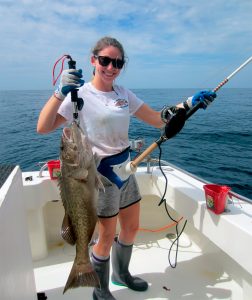
There is a need to improve the management of recreational fisheries, and some organizations have begun piloting and implementing opt-in, self-reporting smartphone and tablet apps to further that goal. We began the process of developing a methodology for assessing the utility of these apps for management by comparing the Snook and Gamefish Foundation’s iAngler app and the Marine Recreational Information Program survey.
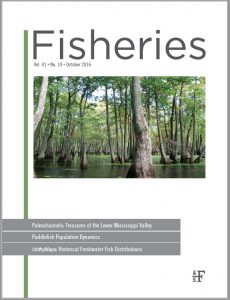
In this Issue: • President’s Column Who and What Are We? • Policy Column The Urgent Need for Intern Opportunities FEATURES • Ecological and Economic Consequences of Ignoring Jellyfish: A Plea for
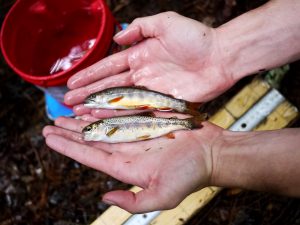
Managing inland fisheries in the 21st century presents several obstacles, including the need to view fisheries from multiple spatial and temporal scales, which usually involves populations and resources spanning sociopolitical boundaries.
Inland fisheries around the world – and the people who depend on them for food, livelihoods, and well-being – need international cross-sectoral action to improve the sustainability of freshwater aquatic
Introduction to the Special Issue To sustainably manage North American fishes, understanding how climate change will impact, and is currently impacting, these ecologically, culturally, and economically valuable resources is a
Les décideurs des ressources naturelles sont mis au défi d’adapter sa gestion aux changements climatiques tout en équilibrant les objectifs de gestion à court terme avec des changements à long terme dans les systèmes aquatiques.