
Fisheries News & Science
AIFRB W.F. Thompson Award
Nominations are open for the W.F. Thompson Award, which will be given by the American Institute of Fishery Research Biologists (AIFRB) to recognize the best student paper in fisheries science


Quick answers to common questions


Nominations are open for the W.F. Thompson Award, which will be given by the American Institute of Fishery Research Biologists (AIFRB) to recognize the best student paper in fisheries science

U.S. Fish and Wildlife Service began 146 years ago on, Feb. 9, 1871, as the U.S. Fish Commission.
Please check out the new column, Photo Diary, in the January issue of Fisheries. Currently accepting submissions. Please contact Sarah Harrison (sharrison@fisheries.org) for more information.
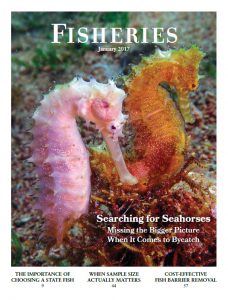
President’s Column The Value of International Connections Policy Column Future of the Nation’s Fisheries and Aquatic Resources: Challenges We Face in 2017 and Beyond Guest Column New National Fish Habitat
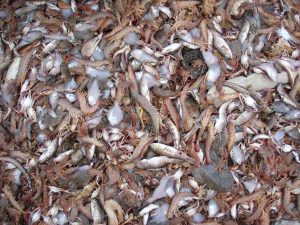
Nonselective fishing gears extract a great many small marine species, such as seahorses, with limited documentation or assessment of their impacts. Our review analyzed data on seahorse bycatch for five gear-type categories and 22 countries, and emphasizes the importance of evaluating bycatch, even for taxa where reported daily catch rates are low.
AFS is entering the third year of its most recent cooperative agreement with NOAA Fisheries. AFS has been working with NOAA Fisheries since 2015 to disseminate news about the
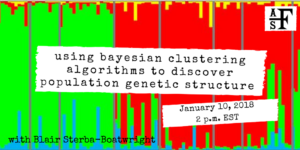
Sorry, but you do not have permission to view this content. Members may Log In to view it. If you are unable to view the content after logging in, please click the “refresh” button on your browser and try again, or clear your browser cache and try again.
The Physical Habitat Simulation System (PHABSIM) was developed in the 1970s to fill an important void in instream flow assessment.
We present a case study of our state agency’s approach to collecting data to support regulation development and accompanying educational efforts in Missouri. We studied other agencies’ approaches, industry pathways, and stakeholder groups to develop and support regulations.
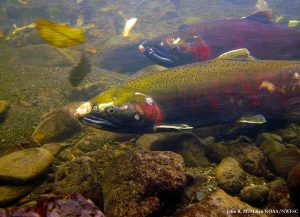
Adult Pacific salmon may reach spawning grounds but perish before reproducing, a phenomenon known as “prespawn mortality.”