
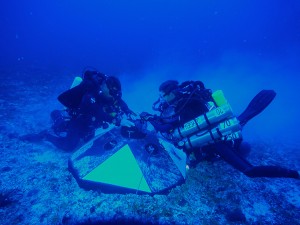
Using a Video Lander to Assess Difficult Marine Habitats
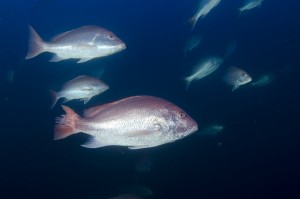
Deep temperate marine zones are known to support significant biological production, but they are difficult to sample because they are too deep for SCUBA and too complex for traditional nets.
American Fisheries Society Family of Websites:
Read our five journals and Fisheries magazine
Find thousands of unpublished agency reports and other information
Join us in Columbus in 2026
Find an AFS Unit near you or in your area of specialty
Fisheries Collaboration Network
Learn how to communicate the effects of climate change on fisheries
Summer internships for high school students
Explore our initiatives to build community in the Society and in the fisheries profession
Find fisheries science products and services
Quick answers to common questions

Deep temperate marine zones are known to support significant biological production, but they are difficult to sample because they are too deep for SCUBA and too complex for traditional nets.

Many AFS researchers are investigating the utility of plant-based feeds for aquaculture, but Brian Ham of the U.S. Fish and Wildlife Service, Bozeman Fish Technology Center, and other Montana colleagues

Many inland fisheries historically have allowed unlimited harvest of panfish, or have extremely liberal bag limits. The management paradigm is that fishing mortality is usually low and high harvests benefit

How fisheries respond to crisis is, unfortunately, a topic of ever growing importance. Anna Henry and Teresa Johnson (School of Marine Sciences, University of Maine) used a people ecology approach

Hatchery managers and aquaculturists love to work with fertilized fish eggs because they provide a handling window in which eggs can be manipulated physically without damage. Thus, fertilized egg shipments

Water quality monitoring is one of the most common activities conducted by stakeholder groups in support of restoration efforts, and most water quality assessments include a provision for measuring pH.

Alabama has the most extensive artificial reef program in the United States, with 15,000-plus artificial reefs. This may come as a surprise to some, considering the state’s coastline is only

Catch and release is a common practice in the management and conservation of recreational fisheries. In theory, fish are caught and released with minimal harm, allowing them to survive, spawn,

Net pen culture has become widespread, and there is growing concern about impacts to benthic communities below the facilities. Potential impacts are hard to assess because the ideal sites for

Whirling disease caused by Myxobolus cerebralis is a scourge for fish culturists and salmonid biologists, and rumors have circulated for decades that its myxospores remain viable for years. Nehring et