Skip to content

American Fisheries Society Family of Websites:

Fisheries.org

American Fisheries Society
Family of Websites

Journals

Read our five journals and Fisheries magazine

Gray Literature Database

Find thousands of unpublished agency reports and other information

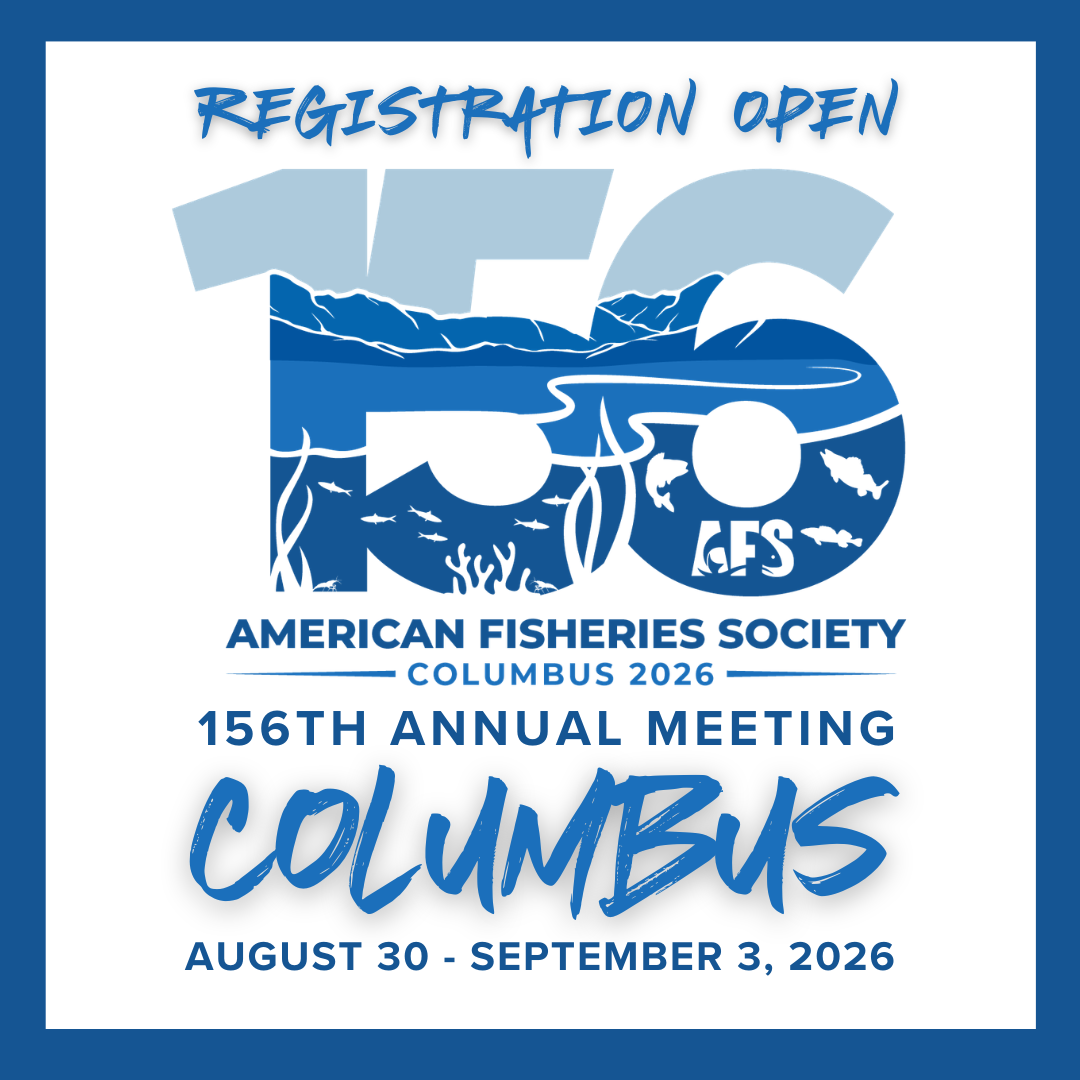
Annual Meeting

Join us in Columbus in 2026

Divisions, Chapters, Sections

Find an AFS Unit near you or in your area of specialty

Fishbook

Fisheries Collaboration Network

Climate Change and Fisheries

Learn how to communicate the effects of climate change on fisheries

Hutton Junior Fisheries Biology Program

Summer internships for high school students

Community Growth and Connections

Explore our initiatives to build community in the Society and in the fisheries profession

Center for Fisheries Technology and Collaboration

Find fisheries science products and services

Center for Technology and Collaboration

Quick answers to common questions

Other Resources
  • Standard Methods for Sampling North American Freshwater Fish Website

  • Rotenone Stewardship Program Information Site

  • Fishionary: A blog about fish words! 
Latest News
2026 Officer Election Voting Now Open AFS Calls for Continued Protection of Boundary Waters from Mining Proposed Rule Would Undermine Science-based Endangered Species Act Future of Public Trust Resources – Statement of the American Fisheries Society Latest Newsletter
Donate
Login
Logout
$0.00 0 Cart
  • Who We Are

    Who We Are

    Governance

    Learn how AFS is structured

    Divisions, Sections, Chapters

    Find a community in your local
    area or in your expertise

    Committees

    Get engaged and volunteer

    Awards & Recognition

    Nominate your heroes

    Community Growth and Connections

    Learn more about our community-building efforts

    AFS Celebrates 150+ Years

    Explore our history

    AFS Fisheries Partnerships

    Meet our global partners

    Meet the Staff

    Dedicated to serving our members

    Contact Us

    Quick answers to common questions

    Support AFS

    Discover how you can support critical AFS programs

    What Are Fisheries?

    Explore fisheries professions

  • MEMBERSHIP

    Membership

    Learn about membership benefits and member types

    Member Directory

    Find your colleagues

    Types of Membership

    For all stages of your career

    Give the Gift
    of Membership

    Invest in an aspiring fisheries
    professional’s future

    Who Are Our Members

    From students to 50-year Golden Members

    Governance

    Learn about our organization and leadership

    My Account

    Log in to access member benefits or renew

    Join/Renew

    It’s Quick and Easy

    Organizational Membership

    Become a Strategic Partner!

  • POLICY

    POLICY

    Recovering America’s
    Wildlife Act

    Critical funding for state conservation programs

    Climate Change

    Communicate the impacts
    of climate change on fisheries

    Magnuson-Stevens Act

    Ensuring sustainability of marine fisheries

    Waters of the US

    News about Clean Water Act
    jurisdiction

    Water Quality

    Healthy fisheries require healthy waters

    Pebble Mine

    Protecting Bristol Bay salmon fisheries

    National Fish
    Habitat Partnership

    Addressing fish habitat regionally

    Infrastructure

    Funding impacts on fish habitat

    Aquaculture

    Providing food security for the future

    Future of the Nation’s
    Aquatic Resources

    Priorities for US fisheries policies

    Recent Policy Statements

    Official policy statements of AFS

    Policy Letters

    Comments on policy,
    legislation, and regulations

    Sport Fish Restoration Act

    Understanding its importance in funding state agency fisheries management

    Advocacy Guidelines

    For Units and members

    Science Guidelines

    Practicing science appropriately

    Briefings

    Congressional briefings with our partners

    Resolutions

    Member-approved resolutions
    on policy

  • NEWS

    News

    Announcements

    Official AFS news

    Annual Meeting

    News from the meeting

    Members in the News

    Awards and interviews

    Policy News

    Round-up of all policy news

    Beneath the Surface Podcast

    A deep dive into the programs and people at AFS

    Federal Workforce and Budget Cuts

    Resources and Ways to Take Action

    Newsletter

    Bi-weekly newsletter for members and partners

    Press Releases

    News media releases

  • EVENTS

    Events

    Annual Meeting

    Columbus 2026

    Future Annual Meetings

    Where we are heading

    Past Annual Meetings

    Where we’ve been

    World Fisheries Congress 2024

    Seattle, Washington

    Other Past Events

    Past special events

    Fisheries Events Calendar

    Events around the world

    Add Your Event Listing

    Submit your calendar item

  • JOBS

    Jobs

    Career Help from AFS

    Compilation of job listing boards

    Other Career Tips

    Career info for members

    Find a Job

    Listings from all over North America

    Post a Job

    Submit your job opening

  • PUBLICATIONS

    Publications

    AFS Journals Program

    More than 150 years of excellence

    AFS Books Program

    Publish with AFS

    Submit Journal Article

    Reach the right audience for your research

    Fisheries Magazine

    Monthly membership magazine

    Writing Tools

    Guides for authors and other resources

    Fishy Fridays

    Weekly blog highlighting AFS fisheries journal articles

    Bookstore

    Shop more than 180 titles

    Journal Online Access

    Log in to access journal articles

    Gray Literature Database

    Thousands of unpublished agency reports and research

  • Professional Development

    Professional Development

    Continuing Education

    Gain skills and enhance your career

    Professional Certification

    Official recognition of your expertise

    Hutton Junior Fisheries
    Biology Program

    Summer high school
    internship program

    Leadership Opportunities

    Hone your leadership skills, volunteer today!

    Training Opportunities Calendar

    Webinars, online courses, on-site workshops, and field training

    Webinars

    Check out upcoming sessions or browse our library

    More Online Resources

    Practical resources for fisheries professionals

  • Engagement

    Engagement

    Strategic Partners

    See how your organization can partner with AFS

    Support AFS

    Discover how you can support critical AFS programs

    The 1870 Society

    Recognizing generous individual donors who invest in the Society's mission

    2024 Annual Report

    Find out what AFS did for the fisheries community in 2024

    Shop AFS

    Check out the latest AFS merch here

Login
Logout

Commerce Secretary Wades into Marine Fisheries Management

  • September 28, 2017
  • Magnuson-Stevens Act, News, News Bites, Policy News
  • Home
  • Commerce Secretary Wades into Marine Fisheries Management

As Commerce chief, Secretary Wilbur Ross’ portfolio includes oversight of NOAA, but it is rather unusual for a cabinet level official to wade into federal fisheries management decisions.  National Marine Fisheries Service (NMFS or NOAA Fisheries), a unit within NOAA is charged with management of the nation’s fisheries. With the help of the six regional science centers, eight regional fisheries management councils, the coastal states and territories, and three interstate fisheries management commissions, NMFS takes a science-based approach to conserving and managing fish stocks in federal waters.  Since taking office in February, Ross has surprised fisheries managers and stakeholders by directly intervening in federal fisheries decisions leaving many wondering whether the Secretary’s atypical approach might be the new norm.

Ross’ first foray into federal fisheries management came with an announcement in June to lengthen the federal Red Snapper season in the Gulf of Mexico from 3 days to 42. The Secretary responded to pleas to provide more access to the resource from recreational fishermen and state managers who were frustrated by shrinking recreational seasons despite larger and more abundant fish. In the late 1980s, NOAA Fisheries and the Gulf of Mexico Fishery Management Council began implementing various regulations to rebuild the Red Snapper population including limiting fishing mortality.  The 2013 stock assessment indicated overfishing was not occurring, the stock was rebuilding but remained overfished, and catch levels could be increased.  Ross justified his deal with the Gulf states to extend the season in exchange for limiting fishing in state waters on the grounds that the current management regime was undermining the federal-state partnership on Red Snapper management, and that it was threatening to undermine federal fisheries management in the Gulf and elsewhere. Given those factors, Ross felt a more modest rebuilding pace was an acceptable risk.

In July, Ross again went outside of standard procedure with his decision to allow New Jersey fishermen to harvest more Summer Flounder than allowed under the catch limits recommended by the Atlantic States Marine Fisheries Commission (of which the state of New Jersey is a member).  Summer Flounder (known locally as fluke) are overfished and under the Commission’s rules states could be required to reduce quotas drastically or implement a region-wide moratorium on fishing if the population falls another 14 percent. Officials in New Jersey, which has one of the region’s largest fluke populations, had drafted an alternative plan that they said would do more to protect the fishery, but it was rejected by the commission, whose scientists concluded the plan would result in nearly 94,000 additional fish being caught.

This move marked the first time the federal government had disregarded such a recommendation by the commission, leading to concerns that political maneuvering could threaten preservation of fragile fish stocks.

“The commission is deeply concerned about the near-term impact on our ability to end overfishing on the Summer Flounder stock as well as the longer-term ability for the commission to effectively conserve numerous other Atlantic coastal shared resources,” Douglas Grout, the commission’s chair, said in a statement. Commissioners and fisheries managers along the east coast, as well as the region’s NOAA officials, expressed concern with the move saying it was unprecedented for a Commerce secretary to make a decision without seeking their input. Such rulings are routinely vetted by NOAA’s regional officials and scientists, who review the commission’s recommendations and then prepare the agency’s response, they said.

The Red Snapper and Summer Flounder decisions were both outside of the regular order of fisheries management decision-making. There’s concern that states and fishing groups will directly seek political relief instead of following NOAA procedures and adhering to fishing quotas set by government experts and scientists.These actions appear to address a Trump Administration promise to reduce bureaucratic hurdles to solving problems. Ross told a Senate panel in June he understood the frustration over a shorter federal Red Snapper season and that he shared Trump’s “commitment to cutting unnecessary red tape and eliminating failed regulations.”

These decisions are being watched closely as Congress considers reauthorizing the Magnuson-Stevens Fisheries Management Act. The House Natural Resources Committee invited Ross to testify at a hearing on federal fisheries management on September 27, but Chris Oliver, Assistant Administrator of NOAA Fisheries, testified in his stead. Oliver, responding to a question by Arizona Rep. Raúl Grijalva, the top Democrat on the Natural Resources Committee, said the decisions in both the Red Snapper and Summer Flounder cases did not involve the administration going against any recommendations made by NOAA scientists or agency leaders. Grijalva asked Oliver to provide more information on both decisions within 30 days and Oliver agreed to do so.

Oliver said the Trump administration has yet to weigh in on specific changes it would seek as part of an overhaul of the Magnuson-Stevens Act, but he said the administration backs “legislative opportunities” that would prove additional flexibility on annual catch limits.

AFS will be watching for other federal fisheries management decisions from Secretary Ross.

  • Recent News

    • Is Bigger Better for Hatchery Chinook Salmon? May 1, 2026
    • Webinar: A Perpetual Franchise to Cultivate Oysters April 30, 2026
    • Webinar: Skin Cancer Risk and Outdoor Workers: Early Detection and Sun Protection Could Save Your Life April 30, 2026
    • AFS Calls for Robust Funding for NOAA Fisheries April 27, 2026
    • AFS Urges Full Funding for US Fish and Wildlife Service, US Geological Survey, and US Forest Service April 24, 2026
  • About

    The American Fisheries Society is 501c Non-Profit Society


    Donate Now

    Quick Links

    • ABOUT
    • POLICY
    • EVENTS
    • PUBLICATIONS
    • MEMBERSHIP
    • NEWS
    • JOBS
    • Contact Us
    • ABOUT
    • POLICY
    • EVENTS
    • PUBLICATIONS
    • MEMBERSHIP
    • NEWS
    • JOBS
    • Contact Us

    Contact

    • 25 Century Boulevard
      Suite 505
      Nashville, TN 37214
    • (301) 897-8616
    Facebook-f Twitter Instagram Linkedin-in Vimeo-v

    Copyright © 2026 American Fisheries Society | Privacy Policy 

    This website uses cookies to improve your experience. Accept Read More
    Privacy & Cookies Policy

    Privacy Overview

    This website uses cookies to improve your experience while you navigate through the website. Out of these, the cookies that are categorized as necessary are stored on your browser as they are essential for the working of basic functionalities of the website. We also use third-party cookies that help us analyze and understand how you use this website. These cookies will be stored in your browser only with your consent. You also have the option to opt-out of these cookies. But opting out of some of these cookies may affect your browsing experience.
    Necessary
    Always Enabled
    Necessary cookies are absolutely essential for the website to function properly. This category only includes cookies that ensures basic functionalities and security features of the website. These cookies do not store any personal information.
    Non-necessary
    Any cookies that may not be particularly necessary for the website to function and is used specifically to collect user personal data via analytics, ads, other embedded contents are termed as non-necessary cookies. It is mandatory to procure user consent prior to running these cookies on your website.
    SAVE & ACCEPT