AFS members, please see your email for voting instructions. Voting ends on March 31.
Background
Steve Lochmann
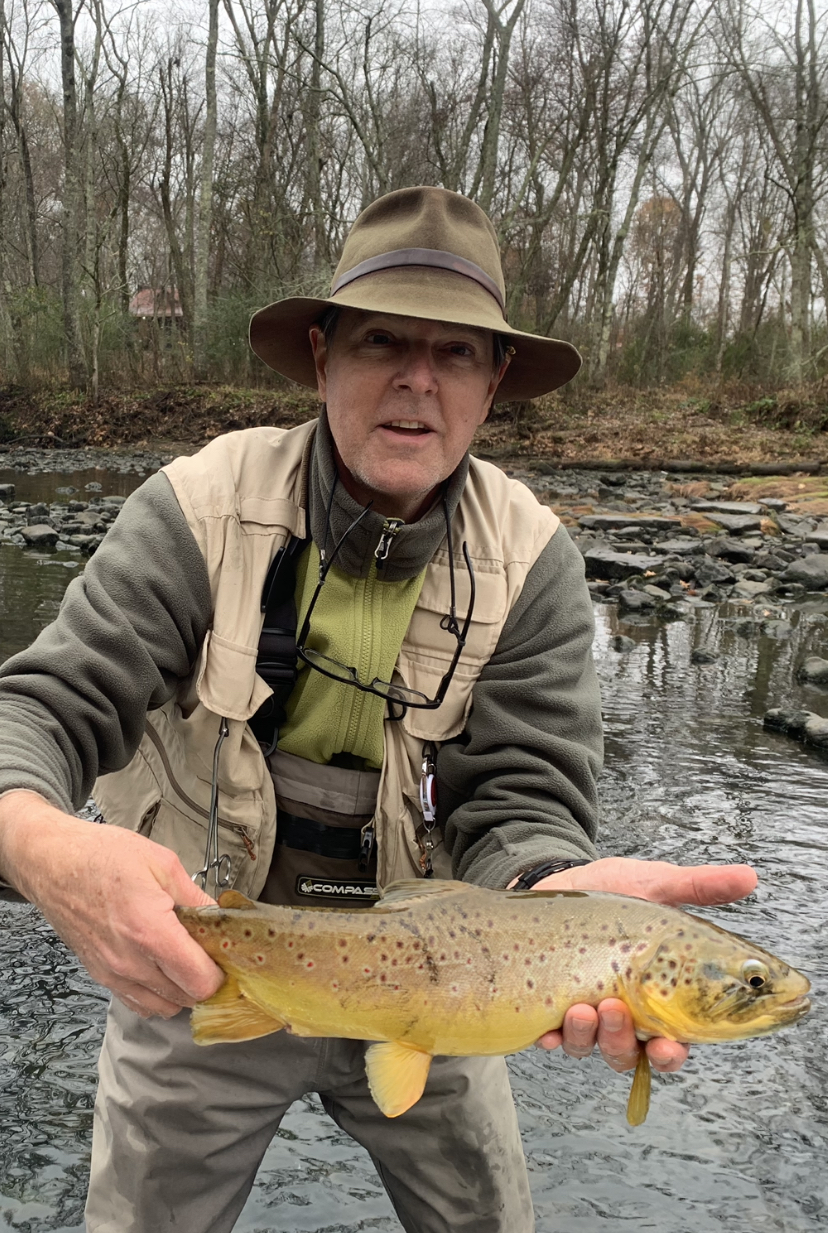
Growing up fishing and boating in the Midwest, I dreamt of becoming a marine biologist. Toward that goal, I earned BS degrees in biology and chemistry, a MS in marine biology, and a PhD in oceanography. Although initially working in the marine realm, a move to the University of Arkansas at Pine Bluff (UAPB) refocused my attention on freshwater fisheries culture, management, and ecology. I’ve raised everything from Yellowcheek Darter to Alligator Gar. I conduct practical research to answer management questions for my state natural resource agency. Beyond academia, I’ve contributed to the American Fisheries at every level. I’ve been president of a chapter, a division, and a section. I served on numerous Society committees including the Governing Board, the management committee, and the Hutton Oversight Committee. In 2015, I was awarded the Emmeline Moore Prize and recognized as an AFS Fellow. In addition to fisheries work and Society service, I hold administrative roles in higher education, focusing on student learning outcome assessment and strategic planning. I espouse the servant leadership model and enjoy helping others reach their full potential
I grew up in the Midwest, boating and fishing like a lot of middle-class suburban kids. I also watched too much Flipper and Jaque Cousteau on TV. At the age of 4, I told my parents I was going to be a marine biologist. However, when it came time for college, my parents weren’t about to send me to the coast to study something as “impractical” as marine biology. Instead, I earned BS degrees in biology and chemistry from Valparaiso University. I managed to spend part of one summer during college on Little Caymen Island doing coral reef surveys through the School for Field Studies. That naive 4-year-old was right! Marine biology, coral reefs, and reef fish were amazing. I eventually earned a MS in marine biology from Florida Tech, and a PhD in oceanography from Texas A&M. I did a post-doctoral work at Texas A&M before taking a research position at Dalhousie University studying recruitment of Atlantic Cod Gadus morhua.
I began working part-time for the Aquaculture and Fisheries Department at the UAPB in 1993, when the department offered my wife an assistant professor position. I was splitting time between Halifax, Nova Scotia, Canada and Pine Bluff, Arkansas, USA, trying to fit into a department where I didn’t think I belonged. Two colleagues, one from the Arkansas Game and Fish Commission and one from the U.S. Fish and Wildlife Service, took pity on me and taught me a bit about freshwater fisheries biology and management. Eventually, I became a professor of fisheries management and ecology. I teach classes, conduct research, and mentor graduate students. Many of my former students work for state fisheries management agencies. My research has included larval fish ecology, chemical marking of hatchery fingerlings, stock enhancement, assessment of sportfish populations, fish assemblages in floodplain lakes and streams, competition studies between black bass Micropterus spp. and hybrid striped bass Morone chrysops x M. saxatilis in reservoirs, distribution and ecology of darters, Brown Trout Salmo trutta biology in tailwaters, and invasive Northern Snakehead Channa argus and Asian carps (Cyprinoidei). I have cultured a variety of species ranging from Atlantic Cod to sunshine bass female M. chrysops × male M. saxatilis and endangered Yellowcheek Darter Nothonotus moorei to Alligator Gar Atractosteus spatula. There is less salt in the water where I work than the 4-year-old me anticipated, but I’m blessed to squeeze fish for a living.
In 2015, I was asked to divide my attention between fisheries and higher education administration. I became a half-time Director of Assessment of Student Learning. I worked with curricular and co-curricular programs, encouraging the pedagogy of durable skills (e.g., teamwork, critical thinking, livelong learning), designing and implementing an assessment management system, mapping instruction across curricula, and creating rubric-based assessments of student learning outcomes. I summarize all sorts of assessment numbers to support accreditation efforts, data-driven decisions, and continuous improvements. Eventually, I became a special assistant to the provost, undertaking projects to revise the tenure and promotion process, evaluating progress toward the goals of our strategic plan, and contributing to creation of a new strategic plan. Someone told me once that I probably contribute more to my institution as the Director of Assessment than I do as a fisheries professor. Surprisingly, I find both jobs fulfilling, perhaps because both allow me to help people reach their potential.
AFS Involvement
My involvement with the American Fisheries Society began at the Chapter level, where I advised the UAPB Student Subunit, served as Chapter newsletter editor, and eventually became Arkansas Chapter President. Subsequently, I held numerous Division and Section roles, including Education Section representative to the Southern Division, student affairs chair for the Division, and Southern Division President. I was also an Associate Editor for the North American Journal of Aquaculture, student activities chair for the Education Section, and ultimately President of the Fish Culture Section. At the Society level, my service has included working as program chair for the 2013 AFS Annual Meeting and the 2020 Southern Division Meeting. I served on and chaired the Hutton Junior Fisheries Biology Program Committee, served on the Emmeline Moore Prize and Carl Sullivan Award selection Committees, served twice on the Governing Board, once on the Management Committee, and chaired the AFS 150th Anniversary Committee. I am currently working on the AFS Strategic Positioning Committee.
Vision
Our Society faces some unprecedented challenges, particularly relative to the role of science in the policymaking process. AFS explicitly states its vision is “…to be recognized as the preeminent organization providing fisheries information to decision-makers in all arenas.” How we navigate troubled waters, fulfill our mission, and achieve our vision will be pivotal to our long-term viability. To achieve this vision, as AFS President, I would focus on communication, harnessing our differences, and leveraging technology. These themes can help AFS remain relevant and achieve preeminence.
There are those in positions of authority that suggest science is an opinion, rather than a process for understanding fundamental truths of the natural world. Better science communication is one response to this challenge. Often, scientists adopt the deficit model of science communication. The deficit model assumes that the public and policymakers are simply uninformed; scientists providing more data and information will help these groups see the world as they should and make decisions accordingly. Data tells us this is a flawed model. We need to adopt better ways of explaining the scientific method and our results to the public and policymakers. I envision AFS playing a role in improving the way our members present their work to the world through science communication workshops, webinars, and unique opportunities like the Climate Ambassadors Program.
Historically, the backbone of AFS has been agency biologists, academics, and students. However, the U.S. population is changing. Our Society and the fisheries profession are likely to change as well. For example, we can see an increase in international members. There are fish assemblage metrics I won’t name because some words are “banned” that we all agree indicate a healthier, more resilient fish community when these metrics are high. The same will be true for AFS. Heterogeneous groups make better decisions than homogeneous groups. The research is clear—look it up. We should not be fearful of this evolution, but we should be prepared for it. For example, maybe AFS journals should more routinely publish abstracts in more than one language. I envision a Society that is prepared for and embraces differences of opinion, because they lead to scientific debate and the evolution of ideas. As AFS President, I would practice allyship, endeavor to recruit a wide range of members, and ensure AFS meetings and activities are supportive for all our members.
Artificial Intelligence (AI) may be the greatest disruptor of our time. This is not just an issue of academic honesty to be dealt with in higher education. Professionals wrestle with how to use this tool to increase productivity and shift workloads away from mundane tasks toward more impactful activities. AI has the capacity to monitor sensors, link data streams, and rapidly identify insights that would take humans orders of magnitude more time. Unfortunately, AI also offers the opportunity to abdicate critical thinking or accept ideas without verifying accuracy. I envision AFS playing a leading role in edifying students and professionals in the ethical and responsible use of this new, promising technological development. As President, I would create standards for use of AI in our journals publication process, foster the pedagogy of proper AI use in academic programs, and create a space where fisheries professionals can share their AI concerns and debate the ethical and technological challenges of embracing this new technology.
The strength of AFS has always been its members and their willingness to voluntarily share their time, talents, and ideas with others. Many members of the American Fisheries Society are like family to me. Who wouldn’t agree to take care of their family when asked to do so? If elected as AFS Second Vice President, I would focus on continuous improvement of science communication, harnessing our differences to improve outcomes, and exploiting new technologies for success. I can’t protect every fish, lake, or stream, but if elected, I will work to encourage, foster, and uplift every fisheries professional in the American Fisheries Society so that each of us achieves our full potential.
Recent News
This website uses cookies to improve your experience. AcceptRead More
Privacy & Cookies Policy
Privacy Overview
This website uses cookies to improve your experience while you navigate through the website. Out of these, the cookies that are categorized as necessary are stored on your browser as they are essential for the working of basic functionalities of the website. We also use third-party cookies that help us analyze and understand how you use this website. These cookies will be stored in your browser only with your consent. You also have the option to opt-out of these cookies. But opting out of some of these cookies may affect your browsing experience.
Necessary cookies are absolutely essential for the website to function properly. This category only includes cookies that ensures basic functionalities and security features of the website. These cookies do not store any personal information.
Any cookies that may not be particularly necessary for the website to function and is used specifically to collect user personal data via analytics, ads, other embedded contents are termed as non-necessary cookies. It is mandatory to procure user consent prior to running these cookies on your website.