Skip to content

American Fisheries Society Family of Websites:

Fisheries.org

American Fisheries Society
Family of Websites

Journals

Read our five journals and Fisheries magazine

Gray Literature Database

Find thousands of unpublished agency reports and other information

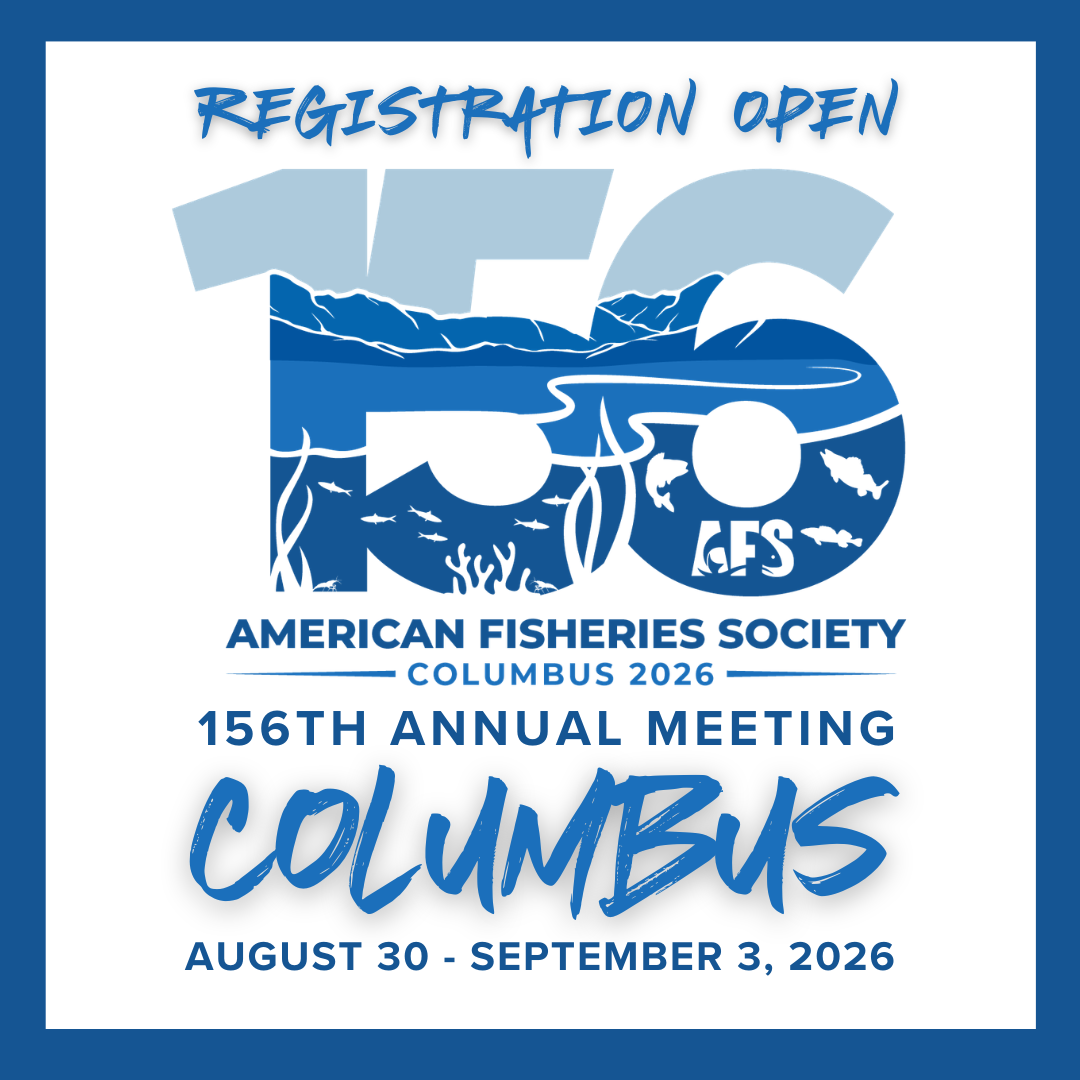
Annual Meeting

Join us in Columbus in 2026

Divisions, Chapters, Sections

Find an AFS Unit near you or in your area of specialty

Fishbook

Fisheries Collaboration Network

Climate Change and Fisheries

Learn how to communicate the effects of climate change on fisheries

Hutton Junior Fisheries Biology Program

Summer internships for high school students

Community Growth and Connections

Explore our initiatives to build community in the Society and in the fisheries profession

Center for Fisheries Technology and Collaboration

Find fisheries science products and services

Center for Technology and Collaboration

Quick answers to common questions

Other Resources
  • Standard Methods for Sampling North American Freshwater Fish Website

  • Rotenone Stewardship Program Information Site

  • Fishionary: A blog about fish words! 
Latest News
2026 Officer Election Voting Now Open AFS Calls for Continued Protection of Boundary Waters from Mining Proposed Rule Would Undermine Science-based Endangered Species Act Future of Public Trust Resources – Statement of the American Fisheries Society Latest Newsletter
Donate
Login
Logout
$0.00 0 Cart
  • Who We Are

    Who We Are

    Governance

    Learn how AFS is structured

    Divisions, Sections, Chapters

    Find a community in your local
    area or in your expertise

    Committees

    Get engaged and volunteer

    Awards & Recognition

    Nominate your heroes

    Community Growth and Connections

    Learn more about our community-building efforts

    AFS Celebrates 150+ Years

    Explore our history

    AFS Fisheries Partnerships

    Meet our global partners

    Meet the Staff

    Dedicated to serving our members

    Contact Us

    Quick answers to common questions

    Support AFS

    Discover how you can support critical AFS programs

    What Are Fisheries?

    Explore fisheries professions

  • MEMBERSHIP

    Membership

    Learn about membership benefits and member types

    Member Directory

    Find your colleagues

    Types of Membership

    For all stages of your career

    Give the Gift
    of Membership

    Invest in an aspiring fisheries
    professional’s future

    Who Are Our Members

    From students to 50-year Golden Members

    Governance

    Learn about our organization and leadership

    My Account

    Log in to access member benefits or renew

    Join/Renew

    It’s Quick and Easy

    Organizational Membership

    Become a Strategic Partner!

  • POLICY

    POLICY

    Recovering America’s
    Wildlife Act

    Critical funding for state conservation programs

    Climate Change

    Communicate the impacts
    of climate change on fisheries

    Magnuson-Stevens Act

    Ensuring sustainability of marine fisheries

    Waters of the US

    News about Clean Water Act
    jurisdiction

    Water Quality

    Healthy fisheries require healthy waters

    Pebble Mine

    Protecting Bristol Bay salmon fisheries

    National Fish
    Habitat Partnership

    Addressing fish habitat regionally

    Infrastructure

    Funding impacts on fish habitat

    Aquaculture

    Providing food security for the future

    Future of the Nation’s
    Aquatic Resources

    Priorities for US fisheries policies

    Recent Policy Statements

    Official policy statements of AFS

    Policy Letters

    Comments on policy,
    legislation, and regulations

    Sport Fish Restoration Act

    Understanding its importance in funding state agency fisheries management

    Advocacy Guidelines

    For Units and members

    Science Guidelines

    Practicing science appropriately

    Briefings

    Congressional briefings with our partners

    Resolutions

    Member-approved resolutions
    on policy

  • NEWS

    News

    Announcements

    Official AFS news

    Annual Meeting

    News from the meeting

    Members in the News

    Awards and interviews

    Policy News

    Round-up of all policy news

    Beneath the Surface Podcast

    A deep dive into the programs and people at AFS

    Federal Workforce and Budget Cuts

    Resources and Ways to Take Action

    Newsletter

    Bi-weekly newsletter for members and partners

    Press Releases

    News media releases

  • EVENTS

    Events

    Annual Meeting

    Columbus 2026

    Future Annual Meetings

    Where we are heading

    Past Annual Meetings

    Where we’ve been

    World Fisheries Congress 2024

    Seattle, Washington

    Other Past Events

    Past special events

    Fisheries Events Calendar

    Events around the world

    Add Your Event Listing

    Submit your calendar item

  • JOBS

    Jobs

    Career Help from AFS

    Compilation of job listing boards

    Other Career Tips

    Career info for members

    Find a Job

    Listings from all over North America

    Post a Job

    Submit your job opening

  • PUBLICATIONS

    Publications

    AFS Journals Program

    More than 150 years of excellence

    AFS Books Program

    Publish with AFS

    Submit Journal Article

    Reach the right audience for your research

    Fisheries Magazine

    Monthly membership magazine

    Writing Tools

    Guides for authors and other resources

    Fishy Fridays

    Weekly blog highlighting AFS fisheries journal articles

    Bookstore

    Shop more than 180 titles

    Journal Online Access

    Log in to access journal articles

    Gray Literature Database

    Thousands of unpublished agency reports and research

  • Professional Development

    Professional Development

    Continuing Education

    Gain skills and enhance your career

    Professional Certification

    Official recognition of your expertise

    Hutton Junior Fisheries
    Biology Program

    Summer high school
    internship program

    Leadership Opportunities

    Hone your leadership skills, volunteer today!

    Training Opportunities Calendar

    Webinars, online courses, on-site workshops, and field training

    Webinars

    Check out upcoming sessions or browse our library

    More Online Resources

    Practical resources for fisheries professionals

  • Engagement

    Engagement

    Strategic Partners

    See how your organization can partner with AFS

    Support AFS

    Discover how you can support critical AFS programs

    The 1870 Society

    Recognizing generous individual donors who invest in the Society's mission

    2024 Annual Report

    Find out what AFS did for the fisheries community in 2024

    Shop AFS

    Check out the latest AFS merch here

Login
Logout

Clean Water Act Section 319 Nonpoint Source Management Crucial to Protect Water Quality

  • January 24, 2020
  • Policy Letters, Policy News, Water Quality
  • Home
  • Clean Water Act Section 319 Nonpoint Source Management Crucial to Protect Water Quality

January 23, 2020

The Honorable John Barrasso
Chairman
Committee on Environment and Public Works
U.S. Senate
410 Dirksen Senate Office Building
Washington, D.C. 20510

The Honorable Thomas R. Carper
Ranking Member
Committee on Environment and Public Works
U.S. Senate
410 Dirksen Senate Office Building
Washington, D.C. 20510

Dear Chairman Barrasso and Ranking Member Carper:

Thank you for holding a hearing on the Clean Water Act’s (CWA) Nonpoint Source Management Program. The American Fisheries Society (AFS) is the world’s oldest and largest professional society of fishery and aquatic scientists and managers. The Society seeks to improve the conservation and sustainability of fishery resources and aquatic ecosystems by advancing fisheries and aquatic science and promoting the development of fisheries professionals.

We write to express support for the Nonpoint Source (Section 319) Program, share our concern for water quality in light of the Waters of the U.S. (WOTUS) Rule released today, and urge you to consider how climate change will exacerbate our nation’s water quality challenges.

Why Federal Leadership in Nonpoint Pollution Control is Needed
Section 319 is an essential program for several reasons. Nationwide, diffuse pollutants, particularly nutrients (nitrogen, phosphorus) and fine sediments continue to degrade the structure and function of our nation’s aquatic resources. Land use remains the major stressor to water quality (Hughes et al. 2019; IPBES 2019). Weakly regulated pollutants associated with agricultural land use are a major contributor to losses in aquatic ecosystem condition. For instance, the USEPA (2016) reported that the Nation’s streams and rivers are burdened by excessive and damaging levels of phosphorus (476,000 miles or 40% of stream miles), nitrogen (329,000 miles; 28%;), riparian vegetation disturbance (284,000 miles; 24%), and sedimentation (177,000 miles; 15%;). Streams and rivers under these conditions support less diverse and impaired aquatic biota, including fish assemblages critical to productive fisheries (Colvin et al. 2019). These national trends can be observed even more starkly at a local or regional scale. For example, in the Willamette Valley; agriculture has been closely linked with negative biological effects on streams and lakes in the upper Mississippi River basin (Deweber et al. 2019); Tennessee-Mississippi basins (Perkin et al. 2019); Kansas River basin (Bruckerhoff and Gido 2019); and Northern Forests, Eastern Temperate Forests, and Great Plains ecoregions (Jacobson et al. 2019).

Because water pollution does not respect political boundaries, it is critically important to continue federal leadership and funding to help states, tribes, and territories to reduce and mitigate diffuse pollution. Section 319 helps focus state, tribal, territorial, and local efforts on reducing nonpoint source pollution through grant money for technical assistance, financial assistance, education, training, technology transfer, demonstration projects and monitoring to assess the success of specific diffuse source implementation projects.

Impact of the New WOTUS Definition
However, the Section 319 program can only be successful if the CWA, in its entirety, can achieve its mandate “to restore and maintain the chemical, physical, and biological integrity of the Nation’s waters.” The newly finalized redefinition of “Waters of the US” removes protection for millions of stream miles and acres of wetlands that maintain watershed integrity and keep waters and watersheds healthy. This new definition makes it difficult, if not impossible, to achieve the objectives of the CWA (Sullivan et al. 2019).

Polluted and degraded aquatic ecosystems have strong effects on fisheries, water-based recreation, and the economy. America’s anglers are estimated to spend $49.8 billion per year in retail sales associated with their sport. With a total annual economic impact of $125 billion, fishing supports more than 800,000 jobs and generates $38 billion in wages and $16 billion in federal, state and local taxes. (ASA 2018). Blue-ribbon trout streams in two Idaho and Wyoming river basins yielded $12 million and $29 million in county income and 341 and 851 jobs in 2004, respectively—markedly more income and jobs than that provided by agriculture, mining, or fossil fuel extraction in those counties (Hughes 2015).

The loss of protections for our nation’s most vulnerable waters will have far-reaching implications for fish, wildlife, and their habitats. The new WOTUS rule is simply inconsistent with the best-available science (Sullivan et al. 2019). By failing to recognize chemical and biological connectivity (and the full scope of hydrological connectivity) in the re-definition of WOTUS, valuable ecosystem services including protecting water quality, recharging aquifers, transporting and cycling of organic material, and maintaining habitats for endangered species are in great peril. These and other ecosystem services depend on watershed and waterbody connectivity.

It is particularly concerning that the new WOTUS rule eliminates protections from many headwater streams and wetlands across the country. Headwater aquatic ecosystems act as a conveyor of nutrients, a path for migrating fish and wildlife, and a drainage and storage system for floodwaters. Most diffuse pollutants enter headwaters because of the extent of headwaters and their close connections with landscapes and land uses (Colvin et al. 2019). It is critically important to protect headwaters from the effects of land mismanagement and intensive and extensive land uses such as agriculture, livestock grazing, silviculture, mining, and urbanization to maintain water quality. Climate change and land use intensification has already shifted waters that were permanent to intermittent and intermittent to ephemeral. Under the revised WOTUS, more waters will lose protection, thus severely undermining our nation’s water quality and fisheries. Such changes have, and will increasingly, hinder effective Section 319 protections and increase the need for even more funding to avoid massive degradation of surface and ground waters.

Climate Change Exacerbates Waterway Impairment
Natural resilience mechanisms that maintain aquatic ecosystem condition and diverse native fish assemblages and highly valued fisheries will be further stressed by climate change. Climate change is accelerating and intensifying water pollution, species range reductions and species extinctions. Funding for programs that strengthen high water quality in its multiple forms (chemical, biological, and physical) and support ecosystem resilience will be necessary to address these challenges. Tried and true practices such as erosion control, wetland preservation and rehabilitation, preserving headwater catchments, improved and expanded riparian vegetation buffers, no-till and low-till agriculture, fallowing, reforestation, and naturalized flow regimes offer cost-effective methods for reducing nonpoint pollution across agricultural, forest, and urban landscapes. Such measures will also increase ecosystem resilience in the face of climate change. However, without a fully functioning Clean Water Act, it will be difficult or impossible to address the impacts of climate change.

Thank you for the opportunity to submit this information to the hearing record. We would be happy to discuss these concerns if you have any questions.

Sincerely,

Drue Banta Winters
Policy Director

  • Recent News

    • AFS Urges Modernization of Sporting Goods Excise Tax that Funds Fisheries Conservation May 13, 2026
    • Is Bigger Better for Hatchery Chinook Salmon? May 1, 2026
    • Webinar: A Perpetual Franchise to Cultivate Oysters April 30, 2026
    • Webinar: Skin Cancer Risk and Outdoor Workers: Early Detection and Sun Protection Could Save Your Life April 30, 2026
    • AFS Calls for Robust Funding for NOAA Fisheries April 27, 2026
  • About

    The American Fisheries Society is 501c Non-Profit Society


    Donate Now

    Quick Links

    • ABOUT
    • POLICY
    • EVENTS
    • PUBLICATIONS
    • MEMBERSHIP
    • NEWS
    • JOBS
    • Contact Us
    • ABOUT
    • POLICY
    • EVENTS
    • PUBLICATIONS
    • MEMBERSHIP
    • NEWS
    • JOBS
    • Contact Us

    Contact

    • 25 Century Boulevard
      Suite 505
      Nashville, TN 37214
    • (301) 897-8616
    Facebook-f Twitter Instagram Linkedin-in Vimeo-v

    Copyright © 2026 American Fisheries Society | Privacy Policy 

    This website uses cookies to improve your experience. Accept Read More
    Privacy & Cookies Policy

    Privacy Overview

    This website uses cookies to improve your experience while you navigate through the website. Out of these, the cookies that are categorized as necessary are stored on your browser as they are essential for the working of basic functionalities of the website. We also use third-party cookies that help us analyze and understand how you use this website. These cookies will be stored in your browser only with your consent. You also have the option to opt-out of these cookies. But opting out of some of these cookies may affect your browsing experience.
    Necessary
    Always Enabled
    Necessary cookies are absolutely essential for the website to function properly. This category only includes cookies that ensures basic functionalities and security features of the website. These cookies do not store any personal information.
    Non-necessary
    Any cookies that may not be particularly necessary for the website to function and is used specifically to collect user personal data via analytics, ads, other embedded contents are termed as non-necessary cookies. It is mandatory to procure user consent prior to running these cookies on your website.
    SAVE & ACCEPT