Skip to content

American Fisheries Society Family of Websites:

Fisheries.org

American Fisheries Society
Family of Websites

Journals

Read our five journals and Fisheries magazine

Gray Literature Database

Find thousands of unpublished agency reports and other information

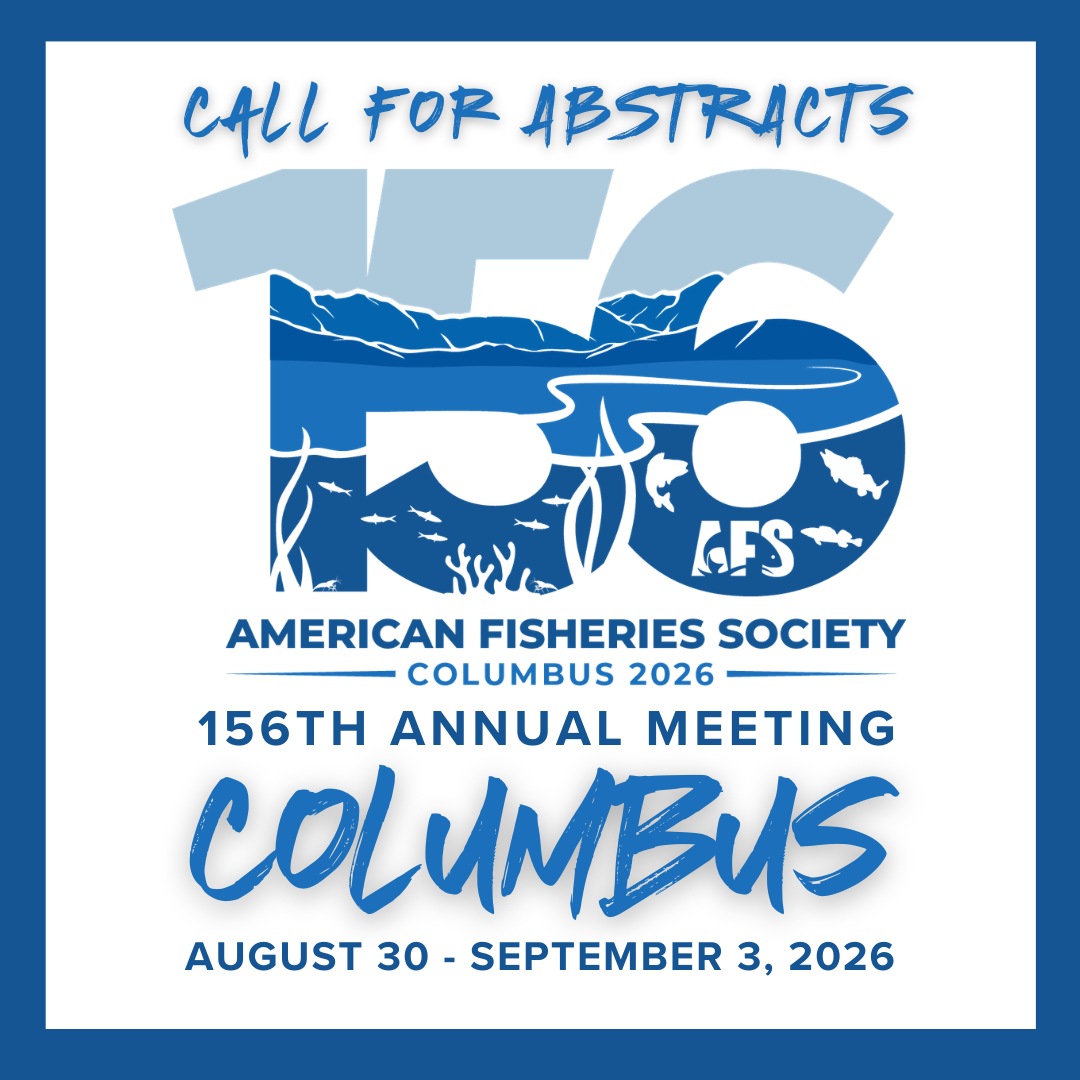
Annual Meeting

Join us in Columbus in 2026

Divisions, Chapters, Sections

Find an AFS Unit near you or in your area of specialty

Fishbook

Fisheries Collaboration Network

Climate Change and Fisheries

Learn how to communicate the effects of climate change on fisheries

Hutton Junior Fisheries Biology Program

Summer internships for high school students

Community Growth and Connections

Explore our initiatives to build community in the Society and in the fisheries profession

Center for Fisheries Technology and Collaboration

Find fisheries science products and services

Center for Technology and Collaboration

Quick answers to common questions

Other Resources
  • Standard Methods for Sampling North American Freshwater Fish Website

  • Rotenone Stewardship Program Information Site

  • Fishionary: A blog about fish words! 
Latest News
2026 Officer Election Voting Now Open AFS Calls for Continued Protection of Boundary Waters from Mining Proposed Rule Would Undermine Science-based Endangered Species Act Future of Public Trust Resources – Statement of the American Fisheries Society Latest Newsletter
Donate
Login
Logout
$0.00 0 Cart
  • Who We Are

    Who We Are

    Governance

    Learn how AFS is structured

    Divisions, Sections, Chapters

    Find a community in your local
    area or in your expertise

    Committees

    Get engaged and volunteer

    Awards & Recognition

    Nominate your heroes

    Community Growth and Connections

    Learn more about our community-building efforts

    AFS Celebrates 150+ Years

    Explore our history

    AFS Fisheries Partnerships

    Meet our global partners

    Meet the Staff

    Dedicated to serving our members

    Contact Us

    Quick answers to common questions

    Support AFS

    Discover how you can support critical AFS programs

    What Are Fisheries?

    Explore fisheries professions

  • MEMBERSHIP

    Membership

    Learn about membership benefits and member types

    Member Directory

    Find your colleagues

    Types of Membership

    For all stages of your career

    Give the Gift
    of Membership

    Invest in an aspiring fisheries
    professional’s future

    Who Are Our Members

    From students to 50-year Golden Members

    Governance

    Learn about our organization and leadership

    My Account

    Log in to access member benefits or renew

    Join/Renew

    It’s Quick and Easy

    Organizational Membership

    Become a Strategic Partner!

  • POLICY

    POLICY

    Recovering America’s
    Wildlife Act

    Critical funding for state conservation programs

    Climate Change

    Communicate the impacts
    of climate change on fisheries

    Magnuson-Stevens Act

    Ensuring sustainability of marine fisheries

    Waters of the US

    News about Clean Water Act
    jurisdiction

    Water Quality

    Healthy fisheries require healthy waters

    Pebble Mine

    Protecting Bristol Bay salmon fisheries

    National Fish
    Habitat Partnership

    Addressing fish habitat regionally

    Infrastructure

    Funding impacts on fish habitat

    Aquaculture

    Providing food security for the future

    Future of the Nation’s
    Aquatic Resources

    Priorities for US fisheries policies

    Recent Policy Statements

    Official policy statements of AFS

    Policy Letters

    Comments on policy,
    legislation, and regulations

    Sport Fish Restoration Act

    Understanding its importance in funding state agency fisheries management

    Advocacy Guidelines

    For Units and members

    Science Guidelines

    Practicing science appropriately

    Briefings

    Congressional briefings with our partners

    Resolutions

    Member-approved resolutions
    on policy

  • NEWS

    News

    Announcements

    Official AFS news

    Annual Meeting

    News from the meeting

    Members in the News

    Awards and interviews

    Policy News

    Round-up of all policy news

    Beneath the Surface Podcast

    A deep dive into the programs and people at AFS

    Federal Workforce and Budget Cuts

    Resources and Ways to Take Action

    Newsletter

    Bi-weekly newsletter for members and partners

    Press Releases

    News media releases

  • EVENTS

    Events

    Annual Meeting

    Columbus 2026

    Future Annual Meetings

    Where we are heading

    Past Annual Meetings

    Where we’ve been

    World Fisheries Congress 2024

    Seattle, Washington

    Other Past Events

    Past special events

    Fisheries Events Calendar

    Events around the world

    Add Your Event Listing

    Submit your calendar item

  • JOBS

    Jobs

    Career Help from AFS

    Compilation of job listing boards

    Other Career Tips

    Career info for members

    Find a Job

    Listings from all over North America

    Post a Job

    Submit your job opening

  • PUBLICATIONS

    Publications

    AFS Journals Program

    More than 150 years of excellence

    AFS Books Program

    Publish with AFS

    Submit Journal Article

    Reach the right audience for your research

    Fisheries Magazine

    Monthly membership magazine

    Writing Tools

    Guides for authors and other resources

    Fishy Fridays

    Weekly blog highlighting AFS fisheries journal articles

    Bookstore

    Shop more than 180 titles

    Journal Online Access

    Log in to access journal articles

    Gray Literature Database

    Thousands of unpublished agency reports and research

  • Professional Development

    Professional Development

    Continuing Education

    Gain skills and enhance your career

    Professional Certification

    Official recognition of your expertise

    Hutton Junior Fisheries
    Biology Program

    Summer high school
    internship program

    Leadership Opportunities

    Hone your leadership skills, volunteer today!

    Training Opportunities Calendar

    Webinars, online courses, on-site workshops, and field training

    Webinars

    Check out upcoming sessions or browse our library

    More Online Resources

    Practical resources for fisheries professionals

  • Engagement

    Engagement

    Strategic Partners

    See how your organization can partner with AFS

    Support AFS

    Discover how you can support critical AFS programs

    The 1870 Society

    Recognizing generous individual donors who invest in the Society's mission

    2024 Annual Report

    Find out what AFS did for the fisheries community in 2024

    Shop AFS

    Check out the latest AFS merch here

Login
Logout

New Study by AFS Members: Salmon Smolts Find Safety in Numbers

  • May 11, 2016
  • News, Spotlight on Members
  • Home
  • New Study by AFS Members: Salmon Smolts Find Safety in Numbers

Using tags surgically implanted into thousands of juvenile salmon, University of British Colombia researchers have discovered that many fish die within the first few days of migration from their birthplace to the ocean.

“We knew that on average 10 to 40 million smolts leave Chilko Lake every year and only about 1.5 million return as adults two years later,” said Nathan Furey, researcher and a PhD candidate in the faculty of forestry. “It’s always been a mystery about what happens in between.”

Researchers from the Pacific Salmon Ecology and Conservation Laboratory at UBC followed the migration of one of B.C.’s largest sockeye populations from Chilko Lake, in British Columbia’s Cariboo region, to the ocean. Each spring, juvenile salmon known as smolts leave this central B.C. lake and migrate downstream through the Chilko, Chilcotin, and Fraser rivers and into the Salish Sea.

To follow the juvenile salmon, researchers implanted small electronic tags into the tiny 12-centimetre fish as they were leaving Chilko Lake. As the smolts made the 1,000-kilometre journey to the Pacific Ocean, acoustic receivers picked up the signals from the tags to monitor how many fish survived the migration.

More than 2,000 salmon were tracked over four years and researchers found that survival was poor in the clear and slow-moving Chilko River, where predators were feeding intensely on the smolts. Once in the murky and fast-flowing Fraser River, the salmon travelled day and night, covering up to 220 km per day, and experienced nearly 100 per cent survival. The researchers believe that in these waters, predators have difficulty finding and getting to the fish.

In a followup study, Furey found that juvenile salmon were more likely to survive the perilous days in the Chilko River if they traveled with lots of other fish. Survival was as low as 40 per cent for salmon that left the lake in small numbers compared to times of peak migration where survival rates increased to more than 90 per cent. The results confirm the old adage that there is safety in numbers and that salmon use this strategy, known as predator swamping, to avoid predators early in life.

“Our studies may help fisheries managers better understand why numbers of adults that return to spawn may be so low in some years,” said Furey.

This research program is led by professor Scott Hinch and is a large collaboration involving Timothy Clarke, a former member of the Pacific Salmon Ecology and Conservation Laboratory, and industry, and Fisheries and Oceans Canada (DFO) and Kintama Ltd. partners. Results were published today in Journal of Animal Ecology and more detail can be found in a recent paper in Ecological Applications. The research was funded by Canada’s Ocean Tracking Network and the Pacific Salmon Foundation.

Find out more in this interview with Nathan  Furey.


This post is a press release from the authors of Journal of AnimalEcology paper “Predator swamping reduces predation risk during nocturnal migration of juvenile salmon in a high-mortality landscape” by Nathan B. Furey et al. Press release issued by The University of British Colombia

  • Recent News

    • Webinar: A Perpetual Franchise to Cultivate Oysters April 30, 2026
    • Webinar: Skin Cancer Risk and Outdoor Workers: Early Detection and Sun Protection Could Save Your Life April 30, 2026
    • AFS Calls for Robust Funding for NOAA Fisheries April 27, 2026
    • AFS Urges Full Funding for US Fish and Wildlife Service, US Geological Survey, and US Forest Service April 24, 2026
    • Barotrauma Leads to Crappie Ice Fishing Woes April 10, 2026
  • About

    The American Fisheries Society is 501c Non-Profit Society


    Donate Now

    Quick Links

    • ABOUT
    • POLICY
    • EVENTS
    • PUBLICATIONS
    • MEMBERSHIP
    • NEWS
    • JOBS
    • Contact Us
    • ABOUT
    • POLICY
    • EVENTS
    • PUBLICATIONS
    • MEMBERSHIP
    • NEWS
    • JOBS
    • Contact Us

    Contact

    • 25 Century Boulevard
      Suite 505
      Nashville, TN 37214
    • (301) 897-8616
    Facebook-f Twitter Instagram Linkedin-in Vimeo-v

    Copyright © 2026 American Fisheries Society | Privacy Policy 

    This website uses cookies to improve your experience. Accept Read More
    Privacy & Cookies Policy

    Privacy Overview

    This website uses cookies to improve your experience while you navigate through the website. Out of these, the cookies that are categorized as necessary are stored on your browser as they are essential for the working of basic functionalities of the website. We also use third-party cookies that help us analyze and understand how you use this website. These cookies will be stored in your browser only with your consent. You also have the option to opt-out of these cookies. But opting out of some of these cookies may affect your browsing experience.
    Necessary
    Always Enabled
    Necessary cookies are absolutely essential for the website to function properly. This category only includes cookies that ensures basic functionalities and security features of the website. These cookies do not store any personal information.
    Non-necessary
    Any cookies that may not be particularly necessary for the website to function and is used specifically to collect user personal data via analytics, ads, other embedded contents are termed as non-necessary cookies. It is mandatory to procure user consent prior to running these cookies on your website.
    SAVE & ACCEPT