Skip to content

American Fisheries Society Family of Websites:

Fisheries.org

American Fisheries Society
Family of Websites

Journals

Read our five journals and Fisheries magazine

Gray Literature Database

Find thousands of unpublished agency reports and other information

Annual Meeting

Join us in Columbus in 2026

Divisions, Chapters, Sections

Find an AFS Unit near you or in your area of specialty

Fishbook

Fisheries Collaboration Network

Climate Change and Fisheries

Learn how to communicate the effects of climate change on fisheries

Hutton Junior Fisheries Biology Program

Summer internships for high school students

Community Growth and Connections

Explore our initiatives to build community in the Society and in the fisheries profession

Center for Fisheries Technology and Collaboration

Find fisheries science products and services

Center for Technology and Collaboration

Quick answers to common questions

Other Resources
  • Standard Methods for Sampling North American Freshwater Fish Website

  • Rotenone Stewardship Program Information Site

  • Fishionary: A blog about fish words! 
Latest News
2026 Officer Election Voting Now Open AFS Calls for Continued Protection of Boundary Waters from Mining Proposed Rule Would Undermine Science-based Endangered Species Act Future of Public Trust Resources – Statement of the American Fisheries Society Latest Newsletter
Donate
Login
Logout
$0.00 0 Cart
  • Who We Are

    Who We Are

    Governance

    Learn how AFS is structured

    Divisions, Sections, Chapters

    Find a community in your local
    area or in your expertise

    Committees

    Get engaged and volunteer

    Awards & Recognition

    Nominate your heroes

    Community Growth and Connections

    Learn more about our community-building efforts

    AFS Celebrates 150+ Years

    Explore our history

    AFS Fisheries Partnerships

    Meet our global partners

    Meet the Staff

    Dedicated to serving our members

    Contact Us

    Quick answers to common questions

    Support AFS

    Discover how you can support critical AFS programs

    What Are Fisheries?

    Explore fisheries professions

  • MEMBERSHIP

    Membership

    Learn about membership benefits and member types

    Member Directory

    Find your colleagues

    Types of Membership

    For all stages of your career

    Give the Gift
    of Membership

    Invest in an aspiring fisheries
    professional’s future

    Who Are Our Members

    From students to 50-year Golden Members

    Governance

    Learn about our organization and leadership

    My Account

    Log in to access member benefits or renew

    Join/Renew

    It’s Quick and Easy

    Organizational Membership

    Become a Strategic Partner!

  • POLICY

    POLICY

    Recovering America’s
    Wildlife Act

    Critical funding for state conservation programs

    Climate Change

    Communicate the impacts
    of climate change on fisheries

    Magnuson-Stevens Act

    Ensuring sustainability of marine fisheries

    Waters of the US

    News about Clean Water Act
    jurisdiction

    Water Quality

    Healthy fisheries require healthy waters

    Pebble Mine

    Protecting Bristol Bay salmon fisheries

    National Fish
    Habitat Partnership

    Addressing fish habitat regionally

    Infrastructure

    Funding impacts on fish habitat

    Aquaculture

    Providing food security for the future

    Future of the Nation’s
    Aquatic Resources

    Priorities for US fisheries policies

    Recent Policy Statements

    Official policy statements of AFS

    Policy Letters

    Comments on policy,
    legislation, and regulations

    Sport Fish Restoration Act

    Understanding its importance in funding state agency fisheries management

    Advocacy Guidelines

    For Units and members

    Science Guidelines

    Practicing science appropriately

    Briefings

    Congressional briefings with our partners

    Resolutions

    Member-approved resolutions
    on policy

  • NEWS

    News

    Announcements

    Official AFS news

    Annual Meeting

    News from the meeting

    Members in the News

    Awards and interviews

    Policy News

    Round-up of all policy news

    Beneath the Surface Podcast

    A deep dive into the programs and people at AFS

    Federal Workforce and Budget Cuts

    Resources and Ways to Take Action

    Newsletter

    Bi-weekly newsletter for members and partners

    Press Releases

    News media releases

  • EVENTS

    Events

    Annual Meeting

    Columbus 2026

    Future Annual Meetings

    Where we are heading

    Past Annual Meetings

    Where we’ve been

    World Fisheries Congress 2024

    Seattle, Washington

    Other Past Events

    Past special events

    Fisheries Events Calendar

    Events around the world

    Add Your Event Listing

    Submit your calendar item

  • JOBS

    Jobs

    Career Help from AFS

    Compilation of job listing boards

    Other Career Tips

    Career info for members

    Find a Job

    Listings from all over North America

    Post a Job

    Submit your job opening

  • PUBLICATIONS

    Publications

    AFS Journals Program

    More than 150 years of excellence

    AFS Books Program

    Publish with AFS

    Submit Journal Article

    Reach the right audience for your research

    Fisheries Magazine

    Monthly membership magazine

    Writing Tools

    Guides for authors and other resources

    Fishy Fridays

    Weekly blog highlighting AFS fisheries journal articles

    Bookstore

    Shop more than 180 titles

    Journal Online Access

    Log in to access journal articles

    Gray Literature Database

    Thousands of unpublished agency reports and research

  • Professional Development

    Professional Development

    Continuing Education

    Gain skills and enhance your career

    Professional Certification

    Official recognition of your expertise

    Hutton Junior Fisheries
    Biology Program

    Summer high school
    internship program

    Leadership Opportunities

    Hone your leadership skills, volunteer today!

    Training Opportunities Calendar

    Webinars, online courses, on-site workshops, and field training

    Webinars

    Check out upcoming sessions or browse our library

    More Online Resources

    Practical resources for fisheries professionals

  • Engagement

    Engagement

    Strategic Partners

    See how your organization can partner with AFS

    Support AFS

    Discover how you can support critical AFS programs

    The 1870 Society

    Recognizing generous individual donors who invest in the Society's mission

    2024 Annual Report

    Find out what AFS did for the fisheries community in 2024

    Shop AFS

    Check out the latest AFS merch here

Login
Logout

GFEMN—International Council of the Global Environment Facility

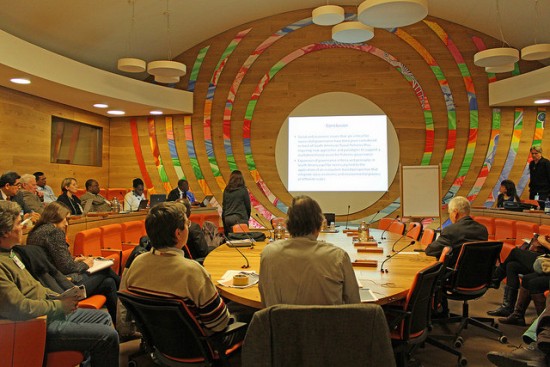
Photo of AFS at the FAO Inland Fisheries
Credit: American Fisheries Society

Today the global community of fisheries science is confronting many substantial challenges. The world’s human population continues to grow, our aquatic resources are under constant threat from over-exploitation, and environmental change has begun to confound our fishery management efforts. The ultimate challenge is to sustain the world with food and at the same time conserve our global aquatic resources. The developing countries of the world have been impacted severely from the decline of regional fisheries and the destruction of aquatic habitat. Scientific capacities must be built in these countries to support the adoption of best available management practices. Fisheries management in many developing countries and countries with economies in transition has traditionally focused primarily on managing fish species as a product for human consumption. However, this approach does not adequately take into account the complex inter-relationship among ecological, economic, and social factors that affect the integrity and function of aquatic ecosystems.

Since 1995, the International Council of the Global Environment Facility included Large Marine Ecosystems (LMEs) as important geographic units for introducing developing countries to innovative strategies for ecosystem-based assessment and management practices leading to more sustainable management of fisheries and other marine resources.

To improve sustainable fisheries management, countries need to adopt a sound scientific approach that takes into account the ecological, economic, and social dimensions of the management challenges facing fisheries worldwide. Managing 21st century fisheries will require communication, cooperation, and coordination between all groups involved in fisheries management. Sound scientific approaches provide the framework for such a responsible, integrated and cross-sectoral approach. At the same time, socioeconomic factors must be taken into consideration when decisions are made regarding fisheries resources. The need for skilled resource managers in this context is readily apparent.

The project is called Global: Promoting Ecosystems-based Approaches to Fisheries Conservation and LMEs. The goal of the project is to support capacity building in developing countries, and countries with economies in transition through the transfer of advanced methods, practices and tools for ecosystem-based fisheries management. The project officially began through participation in the 4th World Fisheries Congress (4th WFC), which was held May 2-6, 2004 in Vancouver. Since then, world fisheries experts have continued to interact and share their expertise through participation in training courses, workshops, and follow-on in-country workshops and transfer of information via electronic networking.

Reconciling Fisheries with Conservation: The Challenge of Managing Aquatic Ecosystems

The world demand for both fisheries and conservation challenges fisheries science and management. Although fisheries date back thousands of years, recent decades have witnessed an unprecedented expansion. Serial depletions by area, species and trophic level have led to a world fish catch in decline. Major alterations to fish habitat have depleted resources in the world’s aquatic ecosystems. In the developed world, fish resources continue to collapse, often with little warning, bringing economic and social ruin to coastal communities. In parts of the developing world, people eke out an existence in coastal ecosystems that are but a shadow of their former diversity and abundance. In the past decade, a broad consensus has emerged that this situation cannot continue, yet solutions remain elusive.

How do we reconcile the human use of aquatic resources with the conservation of ecosystems? We must seek ways to manage fisheries without causing unacceptable losses of biomass, species, diversity, habitats and ecosystem function. To achieve this goal, we shall examine fresh, interdisciplinary ways to evaluate and maintain the economic and social benefits of healthy fisheries, in the face of global climate change, human population trends, competing habitat demands, and the expressed desire for a future world of aquatic ecosystems endowed with natural diversity and resilience. These are the major challenges facing the management of aquatic ecosystems at the opening of the 21st Century.

Steering Committee

Dr. Doug Austen: American Fisheries Society (AFS)/World Council of Fisheries Societies (WCFS); Bethesda, MD, USA

Dr. Ken Sherman: National Oceanic and Atmospheric Administration (NOAA)/ Large Marine Ecosystems (LME); Narragansett, RI, USA

Dr. Sara Graslund: Global Environment Facility (GEF); Washington, DC, USA

Dr. Vladimir Mamaev: United Nations Environment Programme (UNEP)/ Division of Global Environment Facility Coordination (DGEF); Nigeria

Dr. Patricio Bernal: Intergovernmental Oceanographic Commission (IOC); Paris, France

Our Partners

Global Environment Facility: The GEF, established in 1991, helps developing countries fund projects and programs that protect the global environment. GEF grants support projects related to biodiversity, climate change, international waters, land degredation, the ozone layer, and persistent organic pollutants.

Intergovernmental Oceanographic Commission (IOC): The IOC of UNESCO provides Member States of the United Nations with an essential mechanism for global co-operation in the study of the ocean. The IOC assists governments to address their individual and collective ocean and coastal problems through the sharing of knowledge, information and technology and through the coordination of national programs.

National Oceanographic and Atmospheric Association/Large Marine Ecosystem: The LME program provides scientific and technical assistance to developing countries committed to advancing new policies and actions for eliminating causes of transboundary environmental and resource-use practices leading to serious degradation of coastal environments, linked watersheds, and losses in biodiversity and food security from overexploitation in LMEs located around the margins of the Pacific, Indian, and Atlantic Oceans.

United Nations Environment Programme: The mission of the UNEP is to provide leadership and encourage partnership in caring for the environment by inspiring, informing, and enabling nations and peoples to improve their quality of life without compromising that of future generations.

  • Recent News

    • AFS Urges Modernization of Sporting Goods Excise Tax that Funds Fisheries Conservation May 13, 2026
    • Is Bigger Better for Hatchery Chinook Salmon? May 1, 2026
    • Webinar: A Perpetual Franchise to Cultivate Oysters April 30, 2026
    • Webinar: Skin Cancer Risk and Outdoor Workers: Early Detection and Sun Protection Could Save Your Life April 30, 2026
    • AFS Calls for Robust Funding for NOAA Fisheries April 27, 2026
  • About

    The American Fisheries Society is 501c Non-Profit Society


    Donate Now

    Quick Links

    • ABOUT
    • POLICY
    • EVENTS
    • PUBLICATIONS
    • MEMBERSHIP
    • NEWS
    • JOBS
    • Contact Us
    • ABOUT
    • POLICY
    • EVENTS
    • PUBLICATIONS
    • MEMBERSHIP
    • NEWS
    • JOBS
    • Contact Us

    Contact

    • 25 Century Boulevard
      Suite 505
      Nashville, TN 37214
    • (301) 897-8616
    Facebook-f Twitter Instagram Linkedin-in Vimeo-v

    Copyright © 2026 American Fisheries Society | Privacy Policy 

    This website uses cookies to improve your experience. Accept Read More
    Privacy & Cookies Policy

    Privacy Overview

    This website uses cookies to improve your experience while you navigate through the website. Out of these, the cookies that are categorized as necessary are stored on your browser as they are essential for the working of basic functionalities of the website. We also use third-party cookies that help us analyze and understand how you use this website. These cookies will be stored in your browser only with your consent. You also have the option to opt-out of these cookies. But opting out of some of these cookies may affect your browsing experience.
    Necessary
    Always Enabled
    Necessary cookies are absolutely essential for the website to function properly. This category only includes cookies that ensures basic functionalities and security features of the website. These cookies do not store any personal information.
    Non-necessary
    Any cookies that may not be particularly necessary for the website to function and is used specifically to collect user personal data via analytics, ads, other embedded contents are termed as non-necessary cookies. It is mandatory to procure user consent prior to running these cookies on your website.

    SAVE & ACCEPT