

Symposium Summary: Ecology and Reproductive Biology of Hagfish
Hagfish belong to one of the most primitive classes of fish in the world, Agnatha. Although there is lots of information on the primitive nature of their physiology and biochemistry,
American Fisheries Society Family of Websites:
Read our five journals and Fisheries magazine
Find thousands of unpublished agency reports and other information
Join us in Columbus in 2026
Find an AFS Unit near you or in your area of specialty
Fisheries Collaboration Network
Learn how to communicate the effects of climate change on fisheries
Summer internships for high school students
Explore our initiatives to build community in the Society and in the fisheries profession
Find fisheries science products and services
Quick answers to common questions
Hagfish belong to one of the most primitive classes of fish in the world, Agnatha. Although there is lots of information on the primitive nature of their physiology and biochemistry,


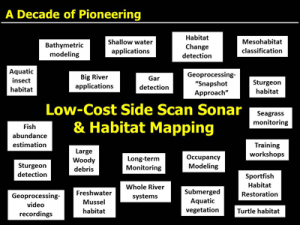
This year marked the 10th anniversary of recreational side-scan sonar—an inexpensive tool for imaging underwater environments in striking detail. The low cost of equipment, and the ability to process and

While marine and inland fisheries are often studied and managed independently, there are actually many similarities. Recognizing and communicating the reasons for the similarities and differences between marine and inland

Science communication, in the form of outreach and engagement, is a frequently suggested approach for achieving fisheries conservation and human well-being goals. Communication is a dynamic process of sending, receiving,

The United States and Canada implemented the Columbia River Treaty in 1964, focused on coordinated flood control and hydropower benefits for both countries from the construction and operation of Mica,

Communities are working together to remove barriers and bring back fish, from the Penobscot to the Elwha to the Salmon River. Dams fundamentally fracture the natural connectivity of rivers, blocking

Sponsor: The American Institute of Fisheries Research Biologists (AIFRB) Building on a long series of sponsored symposia, the American Institute of Fisheries Research Biologists (AIFRB) convened a thought provoking symposium

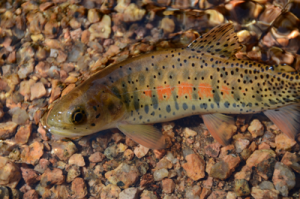
Sponsor: Western Native Trout Initiative “What’s New with Western Native Trout” was a one-and-a-half-day symposium, sponsored by the Western Native Trout Initiative (westernnativetrout.org), that focused on recent conservation and management

Following the historic global inland fisheries conference organized by Michigan State University and the Food and Agriculture Organization of the United Nation earlier this year in Rome, Italy, this symposium

Sponsors: Fisheries Information and Technology Section, Organization of Fish and Wildlife Information Managers, Pacific Northwest Aquatic Monitoring Partnership Symposium This symposium featured more than 20 speakers, beginning with Doug Austen,