Skip to content

American Fisheries Society Family of Websites:

Fisheries.org

American Fisheries Society
Family of Websites

Journals

Read our five journals and Fisheries magazine

Gray Literature Database

Find thousands of unpublished agency reports and other information

Annual Meeting

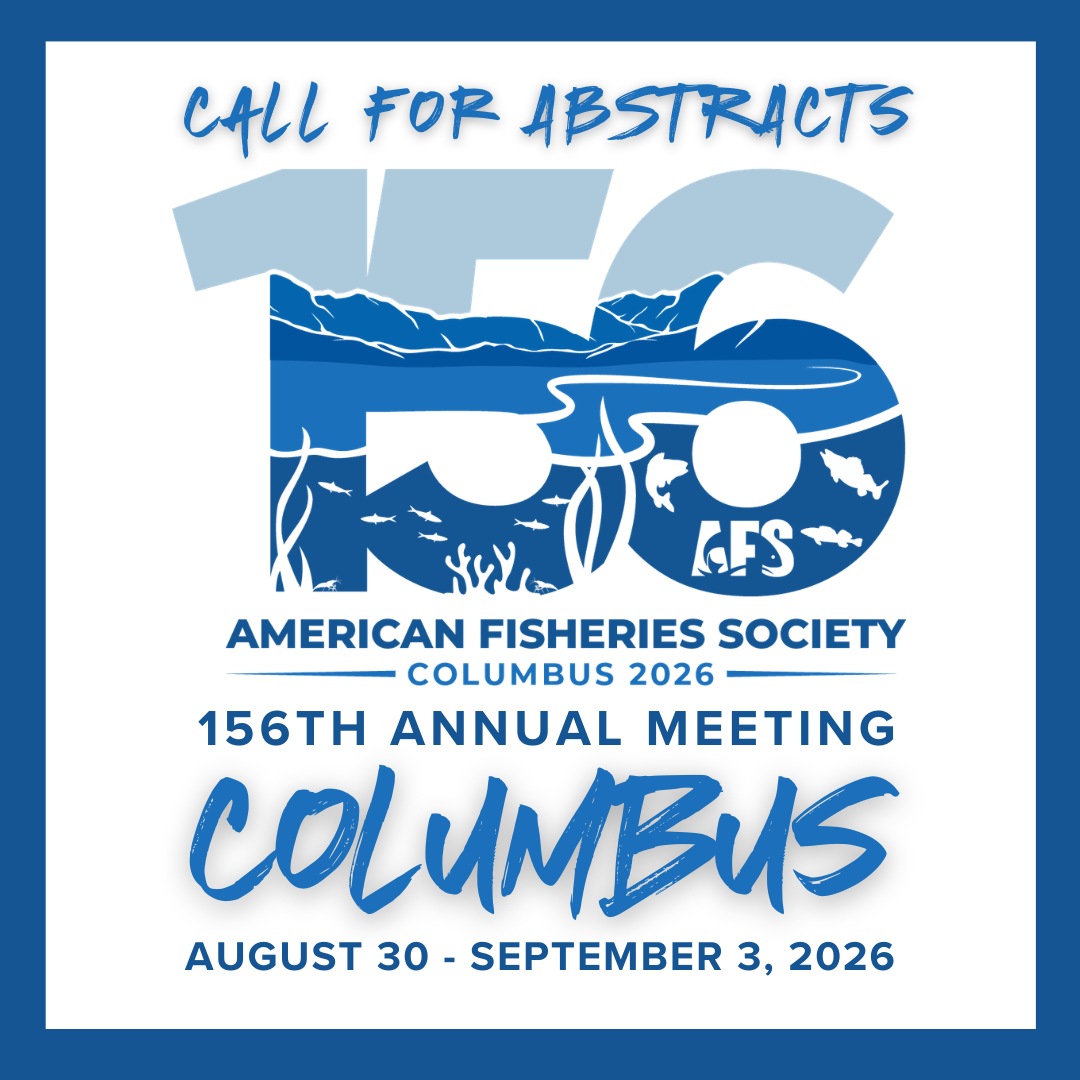
Join us in Columbus in 2026

Divisions, Chapters, Sections

Find an AFS Unit near you or in your area of specialty

Fishbook

Fisheries Collaboration Network

Climate Change and Fisheries

Learn how to communicate the effects of climate change on fisheries

Hutton Junior Fisheries Biology Program

Summer internships for high school students

Community Growth and Connections

Explore our initiatives to build community in the Society and in the fisheries profession

Center for Fisheries Technology and Collaboration

Find fisheries science products and services

Center for Technology and Collaboration

Quick answers to common questions

Other Resources
  • Standard Methods for Sampling North American Freshwater Fish Website

  • Rotenone Stewardship Program Information Site

  • Fishionary: A blog about fish words! 
Latest News
2026 Officer Election Voting Now Open AFS Calls for Continued Protection of Boundary Waters from Mining Proposed Rule Would Undermine Science-based Endangered Species Act Future of Public Trust Resources – Statement of the American Fisheries Society Latest Newsletter
Donate
Login
Logout
$0.00 0 Cart
  • Who We Are

    Who We Are

    Governance

    Learn how AFS is structured

    Divisions, Sections, Chapters

    Find a community in your local
    area or in your expertise

    Committees

    Get engaged and volunteer

    Awards & Recognition

    Nominate your heroes

    Community Growth and Connections

    Learn more about our community-building efforts

    AFS Celebrates 150+ Years

    Explore our history

    AFS Fisheries Partnerships

    Meet our global partners

    Meet the Staff

    Dedicated to serving our members

    Contact Us

    Quick answers to common questions
    Support AFS

    Discover how you can support critical AFS programs

    What Are Fisheries?

    Explore fisheries professions

  • MEMBERSHIP

    Membership

    Learn about membership benefits and member types

    Member Directory

    Find your colleagues

    Types of Membership

    For all stages of your career

    Give the Gift
    of Membership

    Invest in an aspiring fisheries
    professional’s future

    Who Are Our Members

    From students to 50-year Golden Members

    Governance

    Learn about our organization and leadership

    My Account

    Log in to access member benefits or renew

    Join/Renew

    It’s Quick and Easy

    Organizational Membership

    Become a Strategic Partner!

  • POLICY

    POLICY

    Recovering America’s
    Wildlife Act

    Critical funding for state conservation programs

    Climate Change

    Communicate the impacts
    of climate change on fisheries

    Magnuson-Stevens Act

    Ensuring sustainability of marine fisheries

    Waters of the US

    News about Clean Water Act
    jurisdiction

    Water Quality

    Healthy fisheries require healthy waters

    Pebble Mine

    Protecting Bristol Bay salmon fisheries

    National Fish
    Habitat Partnership

    Addressing fish habitat regionally

    Infrastructure

    Funding impacts on fish habitat

    Aquaculture

    Providing food security for the future

    Future of the Nation’s
    Aquatic Resources

    Priorities for US fisheries policies

    Recent Policy Statements

    Official policy statements of AFS

    Policy Letters

    Comments on policy,
    legislation, and regulations

    Sport Fish Restoration Act

    Understanding its importance in funding state agency fisheries management

    Advocacy Guidelines

    For Units and members

    Science Guidelines

    Practicing science appropriately

    Briefings

    Congressional briefings with our partners

    Resolutions

    Member-approved resolutions
    on policy

  • NEWS

    News

    Announcements

    Official AFS news

    Annual Meeting

    News from the meeting

    Members in the News

    Awards and interviews

    Policy News

    Round-up of all policy news

    Beneath the Surface Podcast

    A deep dive into the programs and people at AFS

    Federal Workforce and Budget Cuts

    Resources and Ways to Take Action

    Newsletter

    Bi-weekly newsletter for members and partners

    Press Releases

    News media releases

  • EVENTS

    Events

    Annual Meeting

    Columbus 2026

    Future Annual Meetings

    Where we are heading

    Past Annual Meetings

    Where we’ve been

    World Fisheries Congress 2024

    Seattle, Washington

    Other Past Events

    Past special events

    Fisheries Events Calendar

    Events around the world

    Add Your Event Listing

    Submit your calendar item

  • JOBS

    Jobs

    Career Help from AFS

    Compilation of job listing boards

    Other Career Tips

    Career info for members

    Find a Job

    Listings from all over North America

    Post a Job

    Submit your job opening

  • PUBLICATIONS

    Publications

    AFS Journals Program

    More than 150 years of excellence

    AFS Books Program

    Publish with AFS

    Submit Journal Article

    Reach the right audience for your research

    Fisheries Magazine

    Monthly membership magazine

    Writing Tools

    Guides for authors and other resources

    Fishy Fridays

    Weekly blog highlighting AFS fisheries journal articles

    Bookstore

    Shop more than 180 titles

    Journal Online Access

    Log in to access journal articles

    Gray Literature Database

    Thousands of unpublished agency reports and research

  • Professional Development

    Professional Development

    Continuing Education

    Gain skills and enhance your career

    Professional Certification

    Official recognition of your expertise

    Hutton Junior Fisheries
    Biology Program

    Summer high school
    internship program

    Leadership Opportunities

    Hone your leadership skills, volunteer today!

    Training Opportunities Calendar

    Webinars, online courses, on-site workshops, and field training

    Webinars

    Check out upcoming sessions or browse our library

    More Online Resources

    Practical resources for fisheries professionals

  • Engagement

    Engagement

    Strategic Partners

    See how your organization can partner with AFS

    Support AFS

    Discover how you can support critical AFS programs

    The 1870 Society

    Recognizing generous individual donors who invest in the Society's mission

    2024 Annual Report

    Find out what AFS did for the fisheries community in 2024

    Shop AFS

    Check out the latest AFS merch here

Login
Logout

Candidate Q & A: Margaret Murphy

  • April 25, 2018
  • Membership Business
  • Home
  • Candidate Q & A: Margaret Murphy

Note: Also see the official candidate statement. Voting will open on May 15. Check your email for voting instructions and note that only members who have renewed for 2018 are eligible to vote.

  1. With the 150th anniversary of AFS approaching, can you explain what the Society stands for now and how it should prepare itself to succeed in the next 150 years?
    It’s amazing to think we have been at this for 150 years, and looking back at our history, we are still facing some of the same challenges, as well as many new ones. AFS has always been a voice for research and sustainable management of fisheries resources.  Our diverse membership will serve us well into the future as our challenges are at the ecosystem level and will need collaboration from genetics and bioengineering to water quality and fish habitat professionals to fully understand and respond to these challenges. AFS with its mix of divisions, sections, and chapters has the resources in its membership to work at both the local level, as well as nationally and internationally, with this structure. Preparing for the future means empowering our units while providing the larger voice to communicate issues at a larger scale.
  1. What is one role that AFS does not currently fulfill that you believe could be important in the future and why?
    AFS has a professional certification program; unfortunately, not all members agree about the potential significance of the program. As science is being questioned more and more, having a certification program that is rigorous, relevant, and embraced by the entire membership will allow for greater respect and credibility among other professions and the general public.  We have professional engineers, landscape architects, and many other professional certifications that carry more weight in society. As a scientist working in the private sector, having “certified fisheries professional” next to my name helps define my expertise.  The objectives of certification are: (1) to provide governmental and nongovernmental agencies and organizations, private firms, courts, and the general public with a definitive minimum standard of experience and education for fisheries professionals and (2) to foster broader recognition of fisheries professionals as well educated and experienced, acting in the best interest of the public (emphasis my own). I like that passing a test or multiple tests are not how certification works in AFS.  It is based on our education and what we do related to career training and continuing education, as well as service to the society and our communications with our peers and nonprofessionals; it also needs to be renewed by documenting how we have maintained our skills.  This gives the program amazing credibility. AFS has a goal in the strategic plan: “Support, manage, and promote a fisheries professional certification program that is recognized as a distinguished mark of scientific excellence and expertise within and outside the Society.” We have the program, but we need to do better with promoting the importance of this to our members and to those we work with. We should continue to evaluate the educational requirements for initial certification and work with colleges and universities to keep both aligned with advances in fisheries science.
  2. Science is being challenged in government and in our society. What can AFS do to better respond to this challenge and ensure that our institutions persist and the science that they develop are used properly and effectively in resource management?
    We live in an interesting time where communications come from many sources and many times it is a challenge to find the truth. AFS needs to maintain a focus on strong scientific principles in all that we do.  Nature is dynamic and can be challenging to predict; however, by following the scientific method we can gather information, gain a better understanding of the resource, and defend our conclusions. It is important that we continue to support the various state and federal agencies, nongovernmental agencies, and research institutions that conduct or oversee this work. Conducting research and monitoring programs to better inform management and policy is essential for the future of our fisheries and aquatic resources. AFS can continue to provide support for members through meetings, continuing education, and publishing the best peer-reviewed science possible.  Annual, in-person meetings are still important as face-to-face encounters with our peers, and others we may not interact with otherwise, are vital to advancing fisheries science. We also need to continue to advocate – for the resource and the science – and educate our representatives in Washington on the importance of sustaining and managing aquatic and fishery resources. Our state and federal agencies and the regulations they enforce are critical to maintaining environmental resources.  Softening of regulations such as the Clean Water Act will allow for the advances made since the 1960s and 1970s to slowly erode away. We need to be the strong voice for the environment as well as the humans interacting with it.
  3. How can AFS better contribute to increasing diversity in the profession?
    Working on watershed management and identifying the threats to our aquatic resources is a constant struggle. Funds are limited, and we always seem to respond to an immediate threat with less effort given to proactively assessing all potential threats.  We take our eye off the ball – and that next threat we didn’t pay attention to or think about has arrived and we are in response mode again. We need a holistic approach for watershed management as well as diversifying AFS. AFS needs to proactively assess what we mean by increasing diversity. For much of my career that has meant more women. While I agree, there were not many women at meetings, let alone in leadership early in my career, we are not paying enough attention to other ways of diversifying our membership. If you look back at AFS leadership (past presidents) over the past 148 years – it is dominated by men – even currently. That’s not representative of our membership today – if we want to increase diversity in the profession, we need leadership that represents that diversity. AFS needs to nurture and support women, students and young professionals, as well as other cultures. Our first woman president was in 1927; we have had 8 more since. We need to be proactive and develop actions that will support more diversity. For example, the Hutton Program was envisioned in 2000 as a mechanism to engage underrepresented groups while they were still in high school – what a great time to stimulate a career in fisheries! But do we know how many have gone on to careers in fisheries and become AFS members? Have we continued to stimulate and nurture that interest since their summer internship? In 2016, there were 210 applications with 38 high school students offered internships – only 18% – that’s not good enough, we need to do better. I would like to see this program grow to support more students.
  1. AFS has thousands of “Chapter Only” and “Affiliate” members who are not AFS members. What should AFS be doing to transition these fisheries professionals to AFS membership?
    Early in my career, I became involved in leadership within AFS and had to become a “full-fledged” AFS member.  As a chapter member, I was able to experience the welcoming environment at the local scale; as an AFS member that expanded to a national and international level.  While many argue their focus is only on their state or region and that they don’t need to be “national” members, this is a short-sighted argument as AFS is one entity and our issues and concerns cross chapter lines. We are all interested in maintaining fisheries for current and future generations and AFS as a whole becomes that voice for all the parts – succeeding in ways the individual units cannot.  And units can succeed at the local and regional level knowing they have the support of an international organization.  I think it is critical that AFS portrays itself as something greater than the sum of its units – and helps transition those chapter only members by providing examples of the work being done in support of them. Compared to other professional organizations, AFS is affordable and offers great benefits to its membership.
  2. At the end of your presidency, how will you know you have succeeded through advancing the Society (domestically and/or internationally)?
    If only I had a magic eight ball to summon…It’s been challenging the past two and a half years as I started my own business, with a vision of success, to look beyond several months and getting projects lined up. Thinking about five or six years from now as my term as president ends and trying to gage my (our) success is difficult. However, if I can achieve even one goal – I will consider that successful. My goals for AFS are to continue to support all members and communicate our successes and failures to the general public. If we have improved our outreach and communication of our science to policy makers, as well as the general public, that our research and management is critical to the future of our fisheries and aquatic resources, that would be success. If our membership is more diverse than it is now (by age, sex, ethnicity) – including more diverse leadership – that is success. If I have energized our students and young professionals to passionately advocate for our aquatic resources with full support from AFS – that is success. My success will be AFS’s success and our members’ success.  Only by working together and continuing to advocate for our work can we advance our mission for the next 150 years.
  3. Please tell us something unique or compelling about you that will help you to succeed as an AFS officer and president?
    I don’t give up, but I do compromise when needed. As much as I will fight, I will also work with others and try to listen to and understand their points of view.  Sometimes they have a more compelling view – and I will need to concede a bit. I have learned that collaboration is a give and take – I will passionately argue my position – but it’s not about winning (I do like to win though). It’s about taking a step back, thinking about the various points, and selecting what is best for the resource and all stakeholders. Whether it is removing a dam or just lowering it and providing passage or stocking non-native fish versus promoting a wild native fishery – there will be opposing viewpoints, and a justification for each one. I LOVE what I do – but as a scientist I know there are multiple ways to accomplish similar goals and we are always learning. Being able to listen and incorporate those ways while working with others to find the best solution for each situation is the most satisfying, even if it’s not what I personally wanted or thought was best at the start. In a global world, it’s important to be able to compromise and understand the details of each project and the factors that make it unique.
  • Recent News

    • Webinar: A Perpetual Franchise to Cultivate Oysters April 30, 2026
    • Webinar: Skin Cancer Risk and Outdoor Workers: Early Detection and Sun Protection Could Save Your Life April 30, 2026
    • AFS Calls for Robust Funding for NOAA Fisheries April 27, 2026
    • AFS Urges Full Funding for US Fish and Wildlife Service, US Geological Survey, and US Forest Service April 24, 2026
    • Barotrauma Leads to Crappie Ice Fishing Woes April 10, 2026
  • About

    The American Fisheries Society is 501c Non-Profit Society


    Donate Now

    Quick Links

    • ABOUT
    • POLICY
    • EVENTS
    • PUBLICATIONS
    • MEMBERSHIP
    • NEWS
    • JOBS
    • Contact Us
    • ABOUT
    • POLICY
    • EVENTS
    • PUBLICATIONS
    • MEMBERSHIP
    • NEWS
    • JOBS
    • Contact Us

    Contact

    • 25 Century Boulevard
      Suite 505
      Nashville, TN 37214
    • (301) 897-8616
    Facebook-f Twitter Instagram Linkedin-in Vimeo-v

    Copyright © 2026 American Fisheries Society | Privacy Policy 

    This website uses cookies to improve your experience. Accept Read More
    Privacy & Cookies Policy

    Privacy Overview

    This website uses cookies to improve your experience while you navigate through the website. Out of these, the cookies that are categorized as necessary are stored on your browser as they are essential for the working of basic functionalities of the website. We also use third-party cookies that help us analyze and understand how you use this website. These cookies will be stored in your browser only with your consent. You also have the option to opt-out of these cookies. But opting out of some of these cookies may affect your browsing experience.
    Necessary
    Always Enabled
    Necessary cookies are absolutely essential for the website to function properly. This category only includes cookies that ensures basic functionalities and security features of the website. These cookies do not store any personal information.
    Non-necessary
    Any cookies that may not be particularly necessary for the website to function and is used specifically to collect user personal data via analytics, ads, other embedded contents are termed as non-necessary cookies. It is mandatory to procure user consent prior to running these cookies on your website.
    SAVE & ACCEPT