Fishy Fridays
Weekly spotlight on fisheries science journal articles
Jeff Kopaska
AFS Executive Director
jkopaska@fisheries.org
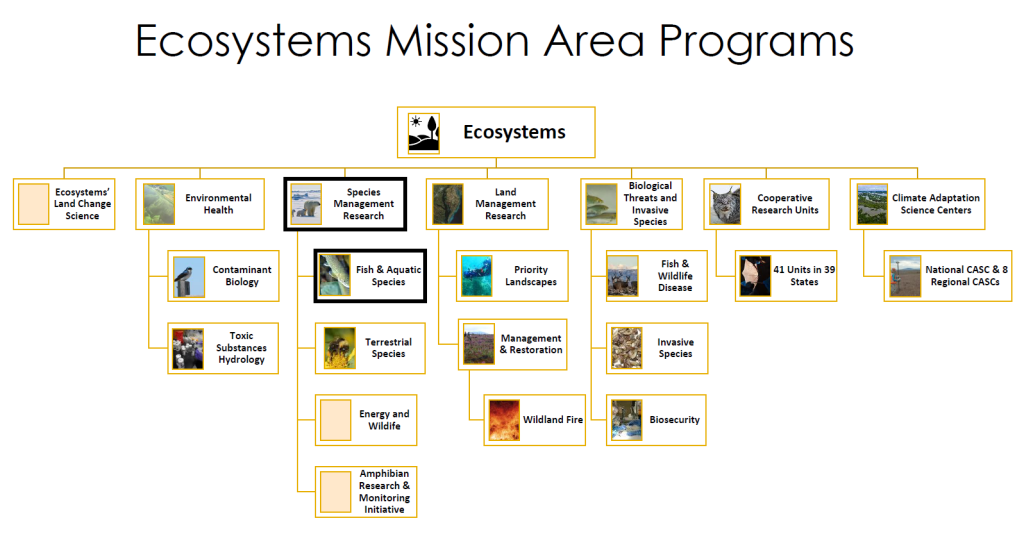
As I mentioned last week, I was recently in Washington, D.C., representing AFS to a number of Congressional staffers, and meeting with fisheries folks from a variety of federal agencies. I had an outstanding meeting with David Hu and Liann Ball from the USGS Ecosystems Mission Area, and I learned about the important collaborative work they do, providing science services across the federal government. Many of you are probably aware that the Ecosystems Mission Area of USGS has been zero-funded/eliminated in the President’s budget, and this includes the Coop Units (I will highlight them next week). The most important next step you as an individual in fisheries can take is to email/call your congressional representatives (especially Senators) and urge them to include funding for the Coop Units, Science Centers, and other aspects of the USGS Ecosystems Mission Area in their 2026 Appropriations. You can find more information here: https://fisheries.org/federal-workforce-and-budget-cuts/. There is a message you can copy and paste, and I would encourage including Ecosystems Mission Area alongside Cooperative Research Units. Many other areas, such as Sea Grant, are also at risk.

Today’s paper is a product of the Upper Midwest Environmental Sciences Center within USGS. This science center does not lie within the Ecosystems Mission Area, but generally does work collaboratively with EMA and receives funding from EMA. This paper is an excellent example of taking a complex, applied science issue (how many fish do we need to tag to monitor population change), digging into the question via a scientific modeling framework, and providing concrete guidance for fisheries managers. The authors were excellent in their description of the background and issue, the methodology they directed to the problem, and the outcomes of their analysis. I spent many late, cold spring nights tagging Walleyes for a tag return study, and having some knowledge about “how many do we really need to tag” is encouraging when you are weary. I think their approach, and inclusion of a variety of parameters validate the usefulness of this paper for carp reduction work, and many other tagging endeavors. Kudos to Jessica, Benjamin and Marybeth, and THANK YOU to all the USGS scientists who do great work like this for the fisheries profession!
Considerations for using tag returns to monitor targeted removal of invasive fishes