
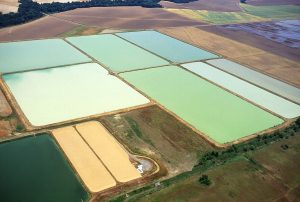
The Role of Zooplankton in Aquaculture Ponds
The project looked at zooplankton harvest from fishless aquaculture ponds, what impacts that had on the phytoplankton and zooplankton communities in those ponds, and how that compared to control systems. It also included the rationale for why one might want to undertake such an activity…
Clarity on Invasive Mussel Impacts on Great Lakes
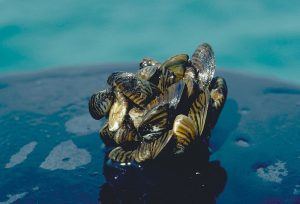
Today’s paper caught my attention, as it looks at the relationship between fish and water quality. That’s long been an area of interest for me. The title addresses changing water clarity, but the causal factor is invasive mussels in the Great Lakes.

AFS Past Presidents Call for Action on Climate Change
“Failing to respond to efforts restricting climate change research, scientific knowledge sharing, and management strategies to alleviate human-caused climate change will continue to have ever-more dire consequences for human societies and our planet.”

Anglers Weigh in on Lunker Bass
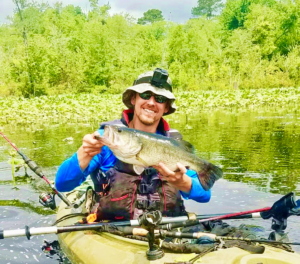
Today’s paper is from NAJFM, and it caught my attention because it reminded me about the great Black Bass 2025 meeting that was held in association with the AFS Annual Meeting. The paper also relied on angler-derived data, which I think is a substantial area of growth for fisheries management.

Innovative Fishway Assists in Fish Migration
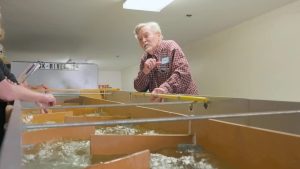
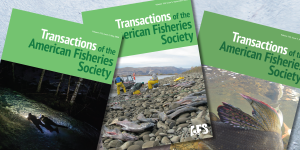
Today is a special Fishy Friday, because you get both a paper and a video! Today’s paper is from TAFS, and it documents fish passage in the Eel River, Indiana, following the installation of a Kynard fishway at a lowhead dam. The accompanying video addresses this type of innovative fishway, and its success in passing small bodied fish.

Best Paper in Marine and Coastal Fisheries
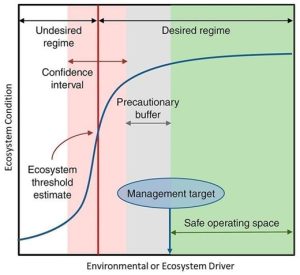
Ecosystem‐level reference points: Moving toward ecosystem‐based fisheries management, by Wendy E. Morrison, Stephanie A. Oakes, Melissa A. Karp, Max H. Appelman, and Jason S. Link

Best Paper in the Journal of Aquatic Animal Health
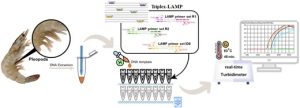
Real‐time triplex loop‐mediated isothermal amplification (LAMP) using a turbidimeter for detection of shrimp infectious hypodermal and hematopoietic necrosis virus (IHHNV), by Narong Arunrut, Sarocha Jitrakorn, Benyatip Tondee, Vanvimon Saksmerprome, and Wansika Kiatpathomchai.

Robert L. Kendall Best Paper in Transactions of the American Fisheries Society
Multiscale analysis predicts native species presence based on habitat and nonnative species abundance, by Crosby Hedden, Skyler Hedden, Keith Gido, Alexander C. Cameron, David Propst, and William Stewart.

More Blue Catfish Vs. Blue Crabs
Today’s paper caught my attention for a couple of reasons. One, I read a separate blue crab/Blue Catfish article a couple weeks ago. Two, one of my staff was at a family gathering recently, and indicated they were asked if the Chesapeake Bay blue crab fishery was going to be shut down – they apparently were supposed to know the answer because they are involved in fisheries!

Effects of Low Thiamine in Wild Salmon
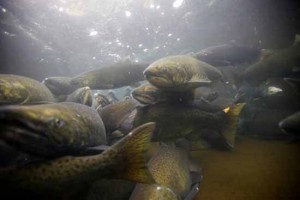
Today’s paper caught my eye because I have read a few items regarding the introduction of salmon to the Great Lakes. I was aware of the variety of issues that caused the decline of the Lake Trout, including the thiamine issue due to the Alewife diet. I was unaware that similar issues were prevalent in other salmonids, or of the high offspring mortality due to thiamine deficiency in Chinook Salmon eggs.

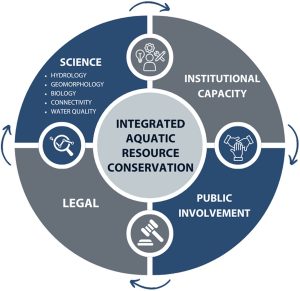
Establishing a National Center for Ecologically Sustainable Water Conservation and Management
I recall sitting in the audience at the AFS-TWS Joint Meeting in Reno, when Tom Annear was given the Carl R. Sullivan Fishery Conservation Award. I got a brief introduction to his life’s work then, and afterwards invited him to come back home to Iowa to talk at our Iowa AFS meeting. Through a number of conversations, I came to understand much more deeply the importance of his work connecting science, law, policy, people, water and ecosystems to fisheries management.

Sturgeon Surprises
Today’s paper is about lake sturgeon culture methods, but the thing that struck me most about today’s paper is collaboration. The adult lake sturgeon brood stock were collected by USFWS field staff in Michigan, the fish were hatched at the USFWS hatchery at Genoa, Wisconsin, the final part of the project occurred at the Freshwater Restoration Ecology Center in Ontario, and the project was funded by NSERC (Canada). In this time of international relationship challenges, this project highlights the importance of our professional interactions and cooperation.